
FISHERIES & AQUACULTURE
Commodity Overview
Fisheries and aquaculture represent one of Nigeria's fastest-growing agricultural sectors, driven by rising protein demand, declining wild fish stocks, and expanding middle-class consumption patterns. With domestic fish consumption exceeding 3.2 million metric tons annually but local production meeting only 60% of demand, Nigeria imports over $1 billion worth of frozen fish each year, creating substantial opportunities for domestic aquaculture expansion to capture import substitution markets.
The economic significance of Nigeria's aquaculture sector extends across food security, employment generation, and rural development dimensions. Fish farming provides income to over 500,000 households across Nigeria's diverse ecological zones, from coastal brackish water systems producing tilapia and mullet to inland pond operations raising catfish and carp. The sector's rapid growth—averaging 15-20% annually over the past decade—reflects strong market fundamentals including consistent demand, attractive profit margins (25-40% for well-managed operations), and relatively short production cycles (4-6 months for catfish) enabling rapid capital turnover.
Nigeria's aquaculture potential remains significantly underutilized despite possessing extensive water resources including 14 million hectares of inland water bodies, 853 kilometers of coastline, and favorable year-round temperatures supporting fish growth. Recent government initiatives including the Fisheries and Aquaculture Development Program have mobilized investment capital and technical support for pond construction, hatchery development, and feed mill establishment.
Top 3 Producing States
1. Delta State
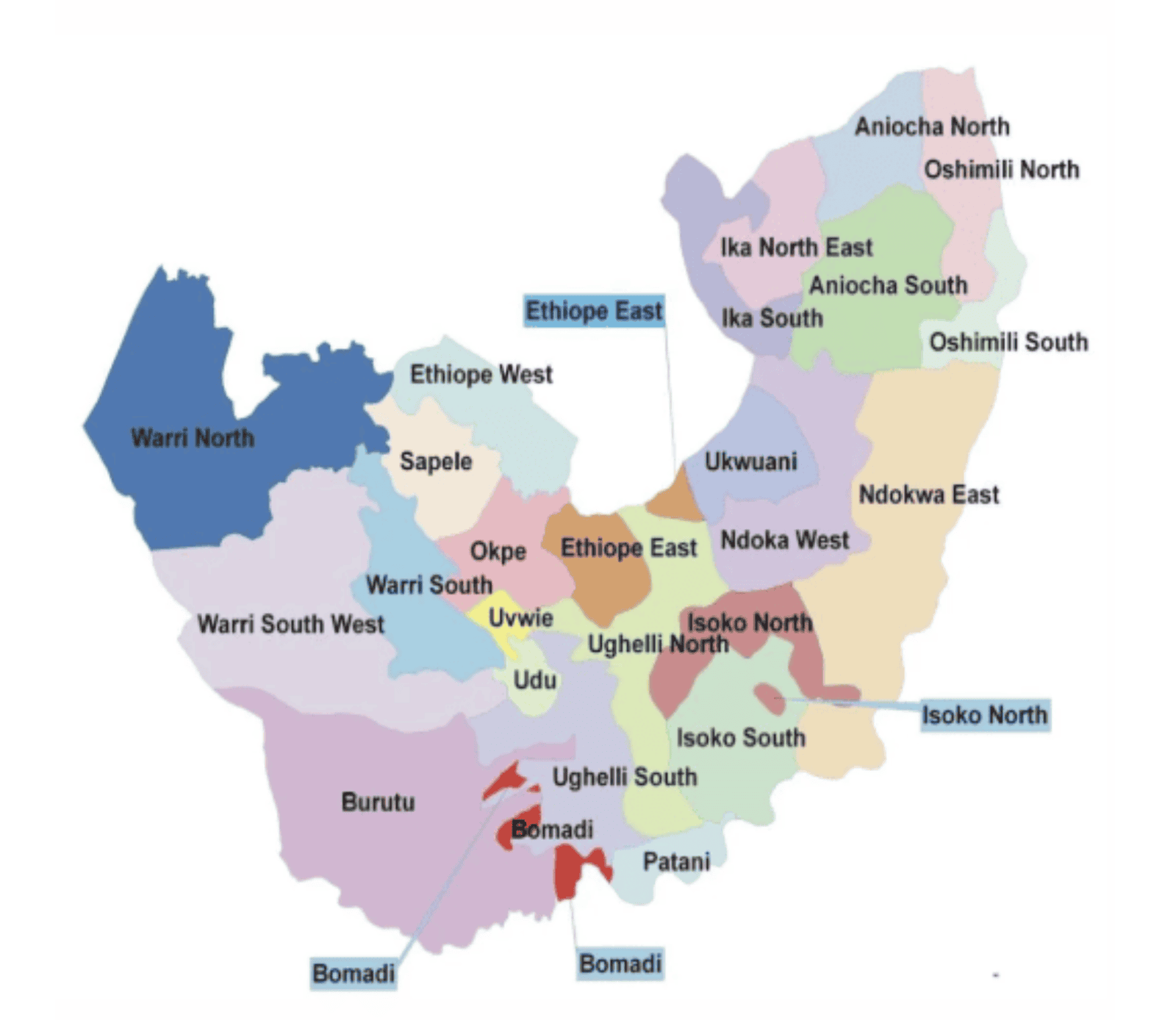
Delta State Map
Best Regions/LGAs for Production
Primary LGA: Warri South
Represents the epicenter of Delta State aquaculture, contributing over 30% of the state's total output. Located in the coastal zone with access to both freshwater and brackish water systems, Warri South benefits from optimal water resources, established fish farming traditions, and superior market access through Warri's commercial infrastructure.
Secondary LGA: Ughelli North
Ranks as Delta State's second-most productive aquaculture zone, distinguished by its extensive freshwater resources and large-scale commercial fish farming operations. The area's abundant water supply from the Niger River system and suitable land for pond construction create ideal conditions.
Tertiary LGA: Zangon Sapele
Positioned along the Benin River, offers strategic advantages through water availability, good road connectivity, and proximity to major markets. The LGA's established fish farming community provides technical knowledge and support infrastructure.
Growing Conditions

Climate
Humid tropical climate with year-round warm temperatures (26-30°C) ideal for fish growth. High humidity and consistent temperatures support continuous production without seasonal slowdowns.
Soil Type
Clay to clay-loam soils with good water retention properties ideal for pond construction. Low permeability reduces seepage and water loss.
Rainfall
Annual precipitation 2,000-3,000mm provides abundant water for pond filling and water exchange. Rainy season (April-October) facilitates pond management.
Temperature
Consistent warm temperatures year-round (26-30°C) fall within optimal range for catfish (28-30°C), tilapia (25-30°C), and other tropical species. No cold season slowdowns.
Water Quality
Generally good water quality with adequate dissolved oxygen, neutral to slightly alkaline pH (6.5-8.0), and low pollution levels in most areas. Regular water quality monitoring essential.
Water Availability
Abundant water resources from Niger River, creeks, tributaries, and groundwater. Both freshwater and brackish water systems available supporting diverse species cultivation.
Project Implementation Strategy
Site Selection & Pond Construction (Months 1-3)
Select suitable site with access to quality water sources, appropriate soil for pond construction, and good road access for input delivery and fish marketing. Construct ponds (earthen or concrete) with proper dimensions, inlet/outlet structures, and drainage systems.
Water Management & Stocking (Months 4-5)
Fill ponds with quality water, test and adjust water quality parameters. Source quality fingerlings from reputable hatcheries. Stock at appropriate densities (2-4 fish per square meter for catfish, 3-5 for tilapia).
Phase 3: Feeding & Growth (Months 6-9)
Implement intensive feeding program using quality commercial feeds (35-45% protein for catfish). Monitor water quality weekly, adjusting as needed. Manage pests and diseases through biosecurity and good husbandry practices.
Phase 4: Harvesting & Marketing (Month 10)
Harvest fish at market size (0.8-1.2 kg for catfish, 0.3-0.5 kg for tilapia). Establish marketing relationships with wholesalers, retailers, or direct consumers. Process and deliver fish to markets.
Phase 5: Continuous Production (Ongoing)
Implement multiple production cycles per year (2-3 cycles for catfish). Optimize stocking densities, feeding rates, and water management based on experience. Explore value-addition through smoking, drying, or processing.
KEY ADVANTAGES & SUCCESS FACTORS
Abundant Water Resources
Extensive freshwater and brackish water systems support diverse aquaculture operations
Optimal Climate
Year-round warm temperatures enable continuous production without seasonal slowdowns
Established Infrastructure
High concentration of hatcheries, feed mills, and market channels reduces input costs and ensures market access
Technical Expertise
Decades of fish farming experience create deep knowledge base and skilled labor availability
Market Demand
Decades of fish farming experience create deep knowledge base and skilled labor availability
2. Ogun State
Ogun State secures the second position among Nigeria's aquaculture producing states through favorable conditions, proximity to Lagos (Nigeria's largest fish market), and strong government support for aquaculture development. The state accounts for approximately 18% of national aquaculture production, producing over 130,000 metric tons annually.
Ogun's competitive advantage stems from its strategic location adjacent to Lagos providing access to Nigeria's largest consumer market (over 20 million people), good road infrastructure facilitating input delivery and fish marketing, and adequate water resources from rivers, streams, and groundwater. The state government has prioritized aquaculture through various support programs including subsidized pond construction and fingerling distribution.
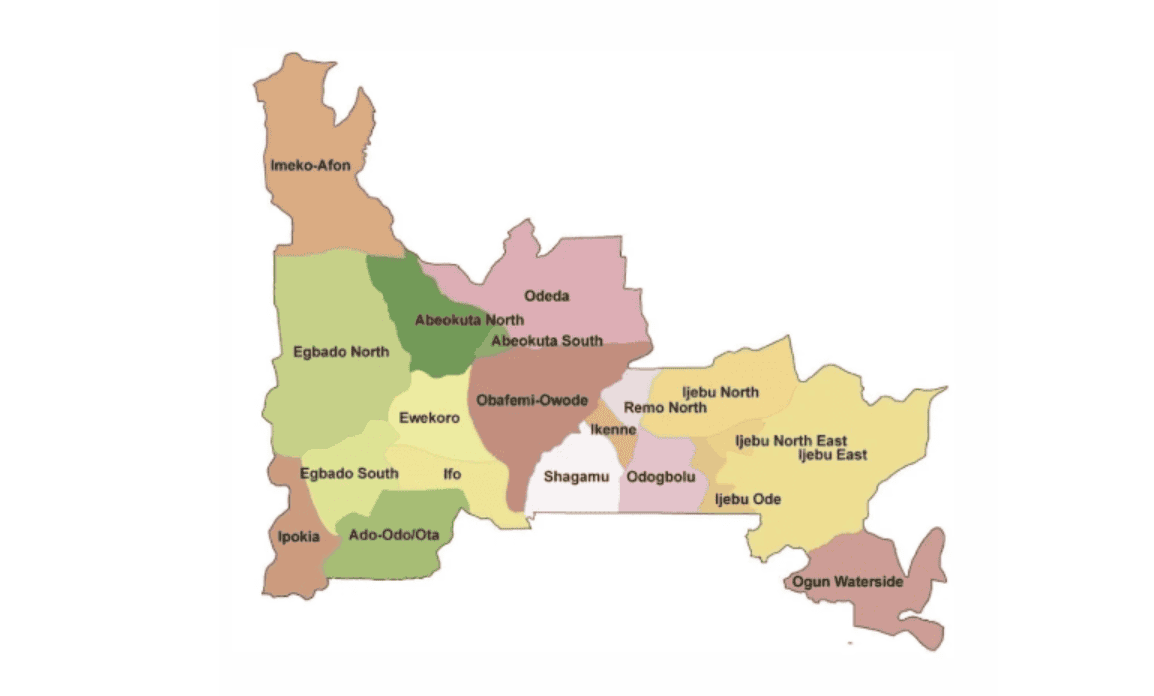
Ogun State Map
Best Regions/LGAs for Production
Primary LGA: Abeokuta South
Represents Ogun State's premier aquaculture zone, benefiting from proximity to Abeokuta (state capital) providing access to inputs, technical services, and markets. Adequate water resources from Ogun River and tributaries support extensive fish farming operations.
Secondary LGA: Ijebu-Ode
Ranks as Ogun's second-most productive aquaculture zone, distinguished by its strategic location between Abeokuta and Lagos providing excellent market access. Growing concentration of commercial fish farms creates developing support infrastructure.
Tertiary LGA: Ado-Odo/Ota
Positioned in the southwestern part of the state bordering Lagos, offers superior market access to Lagos's massive consumer market. Proximity to Lagos reduces transportation time and costs for fresh fish delivery.
Growing Conditions
Climate
Tropical climate with adequate year-round temperatures (25-29°C) for fish production. Slightly cooler than Delta State but within acceptable range for tropical species.
Soil Type
Clay to clay-loam soils suitable for pond construction. Good water retention properties reduce seepage.
Rainfall
Annual precipitation 1,200-1,500mm, adequate for pond management though lower than Delta State. Dry season (November-March) requires attention to water availability.
Temperature
Year-round temperatures 25-29°C support fish growth, though slightly cooler dry season (December-February) may slow growth rates compared to Delta State.
Water Quality
Generally good water quality though requiring regular monitoring and management. Some areas face challenges during dry season requiring supplemental water sources.
Water Availability
Adequate water resources from Ogun River, streams, and groundwater. Water availability requires more management than Delta State but sufficient for commercial operations.
Project Implementation Strategy
Site Selection & Pond Construction (Months 1-3)
Select suitable site with access to quality water sources, appropriate soil for pond construction, and good road access for input delivery and fish marketing. Construct ponds (earthen or concrete) with proper dimensions, inlet/outlet structures, and drainage systems.
Water Management & Stocking (Months 4-5)
Fill ponds with quality water, test and adjust water quality parameters. Source quality fingerlings from reputable hatcheries. Stock at appropriate densities (2-4 fish per square meter for catfish, 3-5 for tilapia).
Phase 3: Feeding & Growth (Months 6-9)
Implement intensive feeding program using quality commercial feeds (35-45% protein for catfish). Monitor water quality weekly, adjusting as needed. Manage pests and diseases through biosecurity and good husbandry practices.
Phase 4: Harvesting & Marketing (Month 10)
Harvest fish at market size (0.8-1.2 kg for catfish, 0.3-0.5 kg for tilapia). Establish marketing relationships with wholesalers, retailers, or direct consumers. Process and deliver fish to markets.
Phase 5: Continuous Production (Ongoing)
Implement multiple production cycles per year (2-3 cycles for catfish). Optimize stocking densities, feeding rates, and water management based on experience. Explore value-addition through smoking, drying, or processing.
KEY ADVANTAGES & SUCCESS FACTORS
Market Access
Proximity to Lagos (20-80km) provides access to Nigeria's largest fish market and premium pricing
Infrastructure
Good road connectivity facilitates input delivery and rapid fresh fish transportation to markets
Government Support
State aquaculture programs provide technical assistance, subsidized inputs, and market facilitation
Technical Services
Access to research institutions, extension services, and aquaculture consultants
Lower Land Costs
Land prices lower than Lagos while maintaining market access advantages
3. Kano State
Kano State secures the third position among Nigeria's aquaculture producing states through strong market demand, government support, and growing technical capacity despite being located in the semi-arid northern region. The state accounts for approximately 12% of national aquaculture production, producing over 85,000 metric tons annually.
Kano's competitive advantage stems from massive local market demand (Kano metropolitan area population exceeds 4 million), premium pricing for fresh fish in northern markets (20-30% higher than southern states), and strong government commitment to aquaculture development as a protein security strategy. The state has invested heavily in water infrastructure including dams, reservoirs, and irrigation systems that support fish farming.
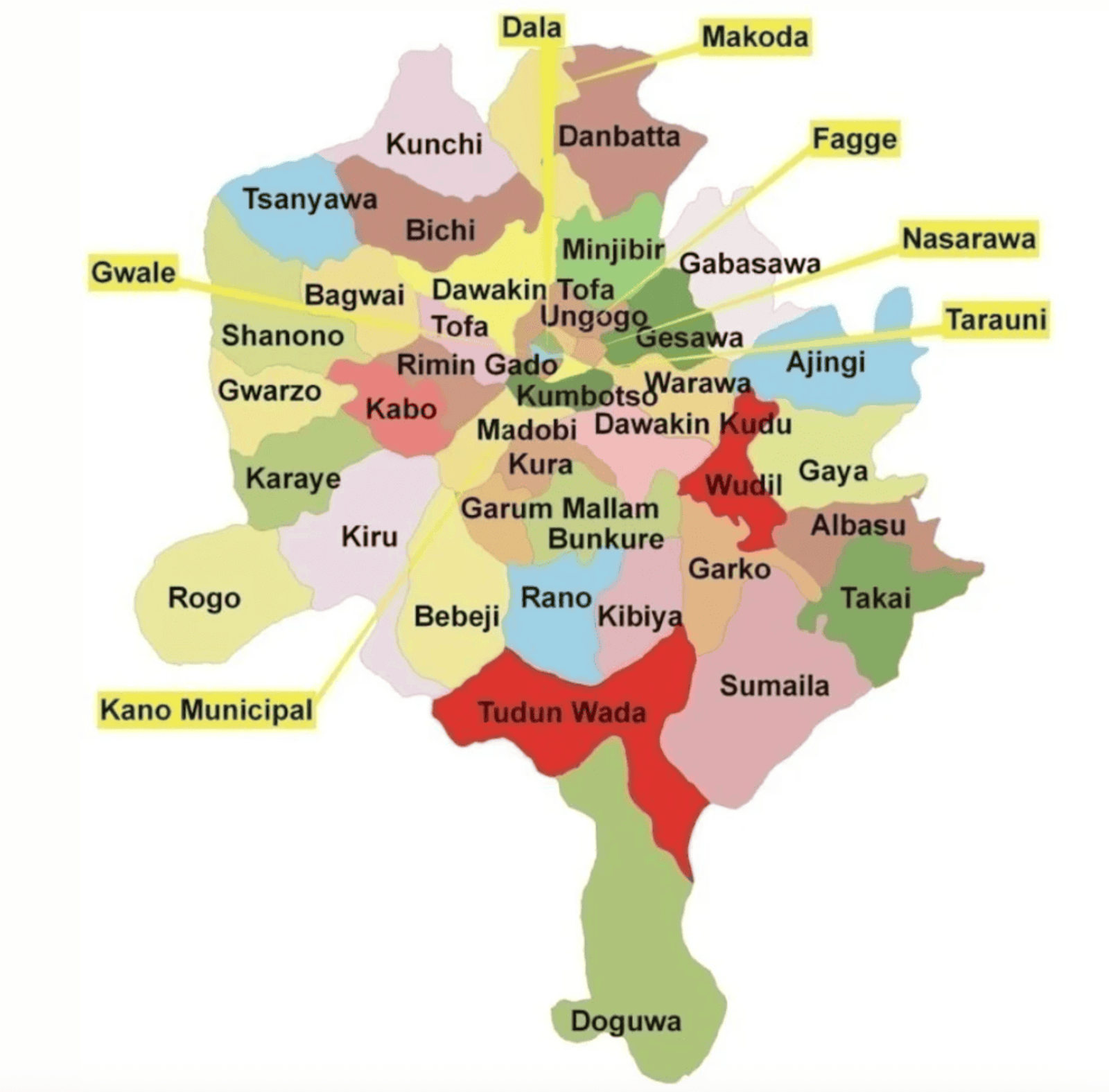
Kano State Map
Best Regions/LGAs for Production
Primary LGA: Kano Municipal
Represents Kano State's premier aquaculture zone, benefiting from proximity to Kano city's massive consumer market and access to water from Tiga and Challawa dams. Urban and peri-urban fish farming operations supply fresh fish directly to city markets.
Secondary LGA: Bunkure
Ranks as Kano's second-most productive aquaculture zone, distinguished by its location near Tiga Dam providing reliable water supply. Large-scale commercial fish farms have established in the area leveraging water availability and market access.
Tertiary LGA: Bagwai
Positioned in the northern part of the state with access to Hadejia River and irrigation systems, offers water availability for fish farming. Growing aquaculture activity supported by government programs and market demand.
Growing Conditions
Climate
Semi-arid climate with pronounced dry season (October-April) and rainy season (May-September). Hot temperatures during dry season (35-40°C) can stress fish requiring water management.
Soil Type
Clay soils with excellent water retention properties ideal for pond construction. Low permeability minimizes seepage in water-scarce environment.
Rainfall
Annual precipitation 600-900mm, concentrated in May-September rainy season. Insufficient rainfall for pond filling requires alternative water sources (dams, boreholes, irrigation systems).
Temperature
Hot temperatures during dry season (35-40°C) can stress fish and increase oxygen demand. Cooler rainy season (25-30°C) provides optimal conditions. Seasonal temperature variation requires management.
Water Quality
Water quality varies by source. Dam and reservoir water generally good quality. Groundwater may have high alkalinity or mineral content requiring treatment.
Water Availability
Water availability is the primary challenge and limiting factor. Successful operations require access to dams, reservoirs, boreholes, or irrigation systems. Dry season (October-April) requires careful water management.
Project Implementation Strategy
Site Selection & Pond Construction (Months 1-3)
Select suitable site with access to quality water sources, appropriate soil for pond construction, and good road access for input delivery and fish marketing. Construct ponds (earthen or concrete) with proper dimensions, inlet/outlet structures, and drainage systems.
Water Management & Stocking (Months 4-5)
Fill ponds with quality water, test and adjust water quality parameters. Source quality fingerlings from reputable hatcheries. Stock at appropriate densities (2-4 fish per square meter for catfish, 3-5 for tilapia).
Phase 3: Feeding & Growth (Months 6-9)
Implement intensive feeding program using quality commercial feeds (35-45% protein for catfish). Monitor water quality weekly, adjusting as needed. Manage pests and diseases through biosecurity and good husbandry practices.
Phase 4: Harvesting & Marketing (Month 10)
Harvest fish at market size (0.8-1.2 kg for catfish, 0.3-0.5 kg for tilapia). Establish marketing relationships with wholesalers, retailers, or direct consumers. Process and deliver fish to markets.
Phase 5: Continuous Production (Ongoing)
Implement multiple production cycles per year (2-3 cycles for catfish). Optimize stocking densities, feeding rates, and water management based on experience. Explore value-addition through smoking, drying, or processing.
KEY ADVANTAGES & SUCCESS FACTORS
Premium Market Pricing
Fresh fish commands 20-30% higher prices in northern markets compared to southern states
Strong Market Demand
Massive local market (Kano metropolitan area 4+ million people) ensures consistent demand
Government Support
Strong state government commitment to aquaculture with infrastructure investment and support programs
Water Infrastructure
Investment in dams, reservoirs, and irrigation systems provides water access despite semi-arid climate
Competitive Advantage
Lower competition compared to southern states creates opportunities for early movers
Conclusion
Fisheries and aquaculture represent a rapidly growing investment opportunity combining strong market demand, attractive profit margins, and relatively short production cycles. Delta State offers optimal conditions with abundant water resources and established infrastructure. Ogun State provides excellent market access to Lagos with adequate water resources. Kano State demonstrates northern market potential with premium pricing despite water challenges requiring infrastructure investment.