
OIL PALM
Commodity Overview
Oil palm (Elaeis guineensis) represents one of the world's most economically significant perennial crops and stands as Nigeria's most valuable agricultural commodity by total production volume and domestic market value. Current annual production of approximately 1.5 million metric tons of crude palm oil meets only 40% of domestic demand, creating a substantial import bill exceeding $500 million annually and representing one of Nigeria's most significant agricultural investment opportunities.
The economic importance of oil palm to Nigeria's economy extends far beyond crude palm oil production. The crop supports an estimated 3 million smallholder farming families across the southern states, with an additional 2 million individuals engaged in processing, transportation, and trading activities. Palm oil serves as the primary cooking oil for over 180 million Nigerians, while palm kernel oil, palm kernel cake, and other derivatives feed into industries ranging from soap manufacturing to animal feed production.
Nigeria's oil palm production potential remains dramatically underutilized despite possessing over 3 million hectares of highly suitable land across the southern forest and derived savanna zones. Recent government initiatives, including the Central Bank of Nigeria's Oil Palm Development Program, have mobilized over ₦200 billion in investment capital targeting both smallholder rehabilitation and large-scale plantation development.
Nigeria's Oil Palm Production Zones
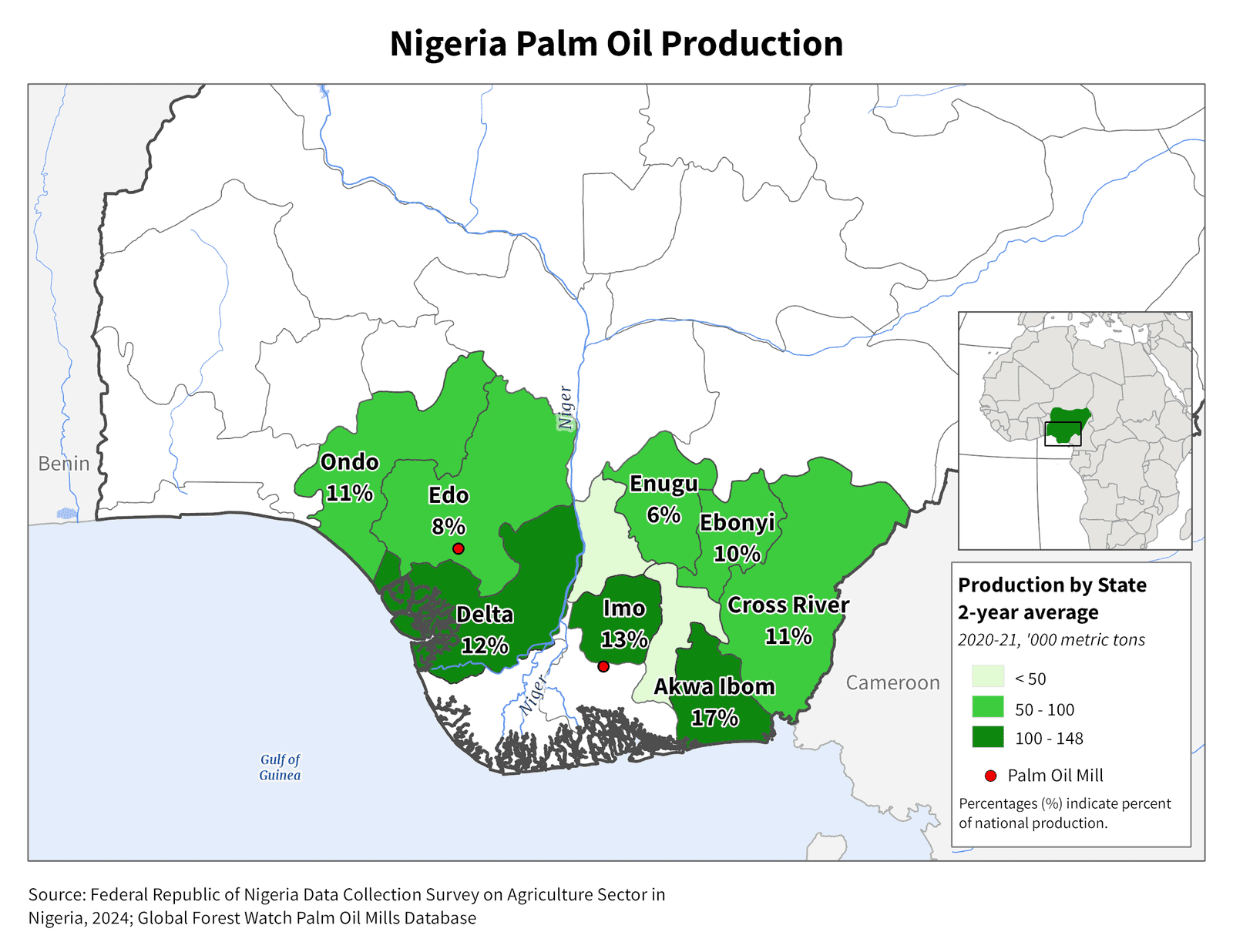
Top 3 Producing States
1. Cross River State
Cross River State dominates Nigerian cocoa production through an exceptional combination of optimal agro-ecological conditions, established farming expertise, and superior logistics infrastructure. The state accounts for approximately 35% of national cocoa output, producing over 85,000 metric tons annually from roughly 280,000 hectares under cultivation.
Cross River's competitive advantage stems from its location within the Guinea-Congo rainforest zone, which provides ideal year-round humidity, consistent rainfall distribution, and rich forest soils that cocoa trees require for optimal growth. Unlike other producing states that experience pronounced dry seasons, Cross River maintains moisture levels conducive to continuous pod development.
Infrastructure advantages further cement Cross River's first-place ranking. The Calabar seaport provides direct export access, reducing transportation costs and time-to-market compared to inland producing states that must truck cocoa to Lagos ports.
Rivers State Map
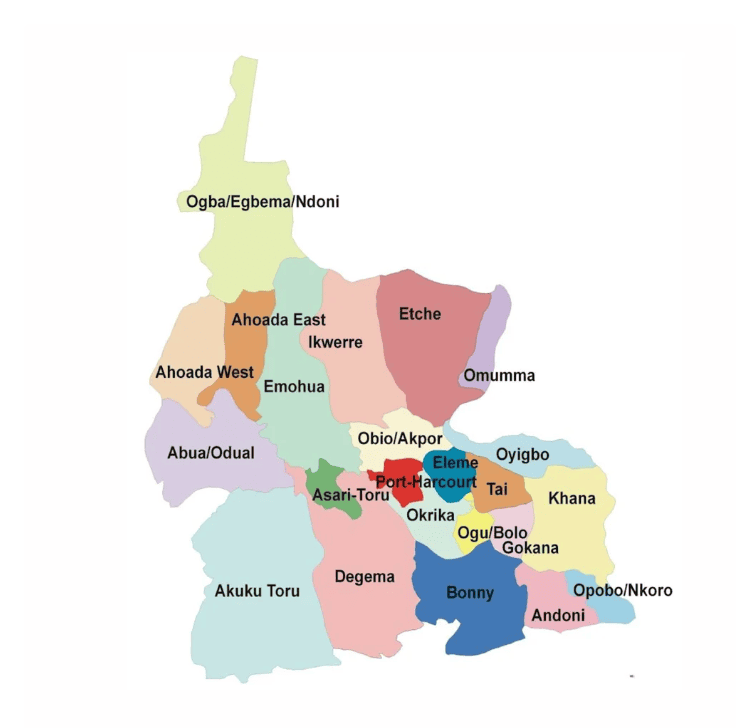
Best Regions/LGAs for Production
Primary LGA: Ogba-Egbema-Ndoni
Represents the epicenter of Rivers State oil palm production, contributing over 35% of the state's total output. Located in the northern upland zone approximately 80 kilometers from Port Harcourt, this LGA benefits from well-drained sandy-loam soils and 2,300-2,600mm annual rainfall. Hosts over 40 palm oil mills creating competitive markets for fresh fruit bunches.
Secondary LGA: Ahoada East
Ranks as Rivers State's second-most productive oil palm zone, distinguished by its extensive riverine areas providing natural irrigation and rich alluvial soils. The LGA's location along the Orashi River creates unique advantages for oil palm cultivation with annual flood cycle depositing nutrient-rich sediments.
Tertiary LGA: Ikwerre
Positioned in the upland zone surrounding Port Harcourt, offers strategic advantages through superior road infrastructure and proximity to processing facilities. The LGA's accessibility and proximity to Port Harcourt create unique opportunities for value-addition and direct market access.
Growing Conditions

Climate
Humid tropical climate with year-round rainfall, mean annual temperature 26-28°C, high relative humidity (75-90%). Bimodal rainfall pattern with major season April-July and minor season September-November.

Soil Type
Deep, well-drained alluvial and coastal plain soils (Ultisols and Inceptisols) with excellent physical properties. Sandy-loam to clay-loam textures, pH 5.0-6.5, high organic matter (3-6%).

Rainfall
Annual precipitation 2,300-2,600mm distributed across 200-220 rain days. Bimodal pattern aligns well with oil palm's continuous flowering and fruiting cycle. No irrigation required.

Temperature
Consistently warm temperatures 26-28°C mean annual, daily maximum 30-32°C, minimum 22-24°C. Minimal seasonal variation ideal for year-round growth.

Altitude
Production occurs at 20-150 meters above sea level. Lower elevations near rivers have deeper alluvial soils, while slightly elevated areas provide better drainage.

Water Availability
Abundant year-round rainfall eliminates irrigation needs. Rivers and streams provide water for processing facilities. High water table in some areas requires drainage management.
Project Implementation Strategy
Phase 1: Land Acquisition & Preparation (Months 1-9)
Secure suitable land through community negotiations or long-term leases. Conduct comprehensive soil surveys. Clear land selectively preserving beneficial trees. Establish road networks and drainage systems.
Phase 2: Nursery & Planting (Months 10-18)
Establish nursery with certified Tenera hybrid seedlings. Plant 9-12 month seedlings at 9m triangular spacing (143 palms/hectare). Plant cover crops (legumes) to control erosion and improve soil fertility.
Phase 3: Immature Phase Management (Months 19-48)
Implement intensive weed control and fertilization program. Establish intercropping with cassava, maize, or vegetables during first 3 years. Monitor pests and diseases, implementing integrated pest management.
Phase 4: First Harvest & Processing (Months 49-60)
Begin harvesting at 30-36 months with initial yields 6-8 tons FFB/hectare. Establish processing arrangements with nearby mills or invest in own small-scale mill (3-5 tons/hour capacity).
Phase 5: Full Production & Optimization (Year 5+)
Achieve peak yields of 20-25 tons FFB/hectare. Optimize harvesting cycles (every 10-14 days). Explore value-addition through palm kernel crushing, refined oil production, or oleochemical manufacturing.
KEY ADVANTAGES & SUCCESS FACTORS
Optimal Growing Conditions
Year-round rainfall, high humidity, and rich soils create ideal conditions for maximum productivity
Processing Infrastructure
Highest concentration of palm oil mills in Nigeria ensures competitive markets for fresh fruit bunches
Market Access
Port Harcourt provides direct export access and supports downstream processing industries
Technical Support
NIFOR substation provides improved planting materials and technical assistance
Government Support
State Oil Palm Development Program provides extension services and rehabilitation support
2. Akwa Ibom State
Akwa Ibom State secures the second position among Nigeria's oil palm producing states through favorable agro-ecological conditions similar to Rivers State, strong government support for agricultural development, and expanding processing infrastructure. The state accounts for approximately 22% of national palm oil production, producing over 330,000 metric tons annually.
Akwa Ibom's competitive advantage stems from optimal rainfall (2,200-2,800mm annually), suitable soils, and strategic location with access to both domestic and export markets. The state government has prioritized oil palm development through various programs including subsidized seedling distribution and mill rehabilitation.
Akwa Ibom Map
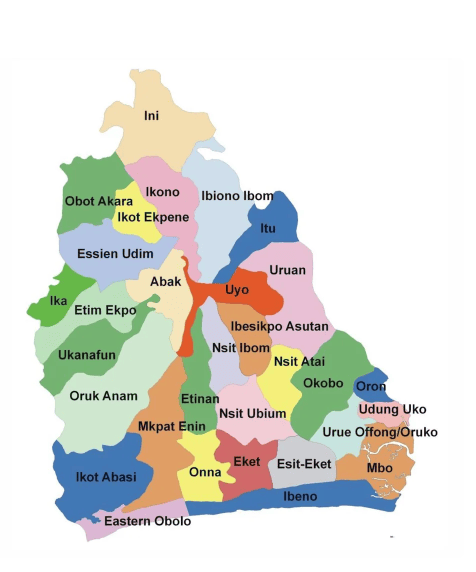
Best Regions/LGAs for Production
Primary LGA: Ikot Ekpene
Represents Akwa Ibom State's premier oil palm-producing zone, historically known as the "Raffia City" but equally significant for oil palm cultivation. Benefits from optimal rainfall, suitable soils, and established farming traditions spanning multiple generations.
Secondary LGA: Ini
Ranks as Akwa Ibom's second-most productive oil palm zone, distinguished by its extensive areas of suitable land and lower population density allowing for large-scale commercial plantation development.
Tertiary LGA: Abak
Positioned in the central part of the state, offers advantages through good road connectivity and proximity to Uyo, the state capital. Strategic location facilitates input delivery and product marketing.
Growing Conditions
Climate
Humid tropical climate similar to Rivers State with year-round rainfall and high humidity. Bimodal rainfall pattern supports continuous oil palm growth and fruiting.
Soil Type
Deep, well-drained coastal plain soils with good physical properties. Sandy-loam to clay-loam textures, pH 5.0-6.5, moderate to high organic matter.
Rainfall
Annual precipitation 2,200-2,800mm, among the highest in Nigeria. Excellent distribution ensures consistent moisture availability throughout the year.
Temperature
Consistently warm temperatures 26-28°C mean annual with minimal seasonal variation. Ideal for year-round oil palm productivity.
Altitude
Production occurs at 20-100 meters above sea level. Relatively flat terrain facilitates mechanization and plantation operations.
Water Availability
Abundant year-round rainfall eliminates irrigation needs. Numerous rivers and streams provide water for processing facilities.
Project Implementation Strategy
Phase 1: Land Acquisition & Preparation (Months 1-9)
Secure suitable land through community negotiations or long-term leases. Conduct comprehensive soil surveys. Clear land selectively preserving beneficial trees. Establish road networks and drainage systems.
Phase 2: Nursery & Planting (Months 10-18)
Establish nursery with certified Tenera hybrid seedlings. Plant 9-12 month seedlings at 9m triangular spacing (143 palms/hectare). Plant cover crops (legumes) to control erosion and improve soil fertility.
Phase 3: Immature Phase Management (Months 19-48)
Implement intensive weed control and fertilization program. Establish intercropping with cassava, maize, or vegetables during first 3 years. Monitor pests and diseases, implementing integrated pest management.
Phase 4: First Harvest & Processing (Months 49-60)
Begin harvesting at 30-36 months with initial yields 6-8 tons FFB/hectare. Establish processing arrangements with nearby mills or invest in own small-scale mill (3-5 tons/hour capacity).
Phase 5: Full Production & Optimization (Year 5+)
Achieve peak yields of 20-25 tons FFB/hectare. Optimize harvesting cycles (every 10-14 days). Explore value-addition through palm kernel crushing, refined oil production, or oleochemical manufacturing.
KEY ADVANTAGES & SUCCESS FACTORS
Optimal Growing Conditions
Rainfall and soil conditions rival Rivers State, creating excellent productivity potential
Government Support
Strong state government commitment to oil palm development through various support programs
Lower Land Costs
Land prices 20-40% lower than Rivers State while maintaining similar growing conditions
Expansion Potential
Substantial areas of suitable land available for commercial plantation development
Market Access
Strategic location provides access to both domestic markets and export routes
3. Edo State
Edo State secures the third position among Nigeria's oil palm producing states through favorable conditions in its southern zone, established commercial plantation presence, and superior market access to Lagos. The state accounts for approximately 18% of national palm oil production, producing over 270,000 metric tons annually.
Edo's competitive advantage includes hosting Nigeria's largest and most successful commercial oil palm plantations (Okomu Oil Palm Company and Presco Plc), excellent road connectivity to Lagos via Benin-Lagos expressway, and strong technical expertise developed through decades of commercial plantation operations.
Edo State Map
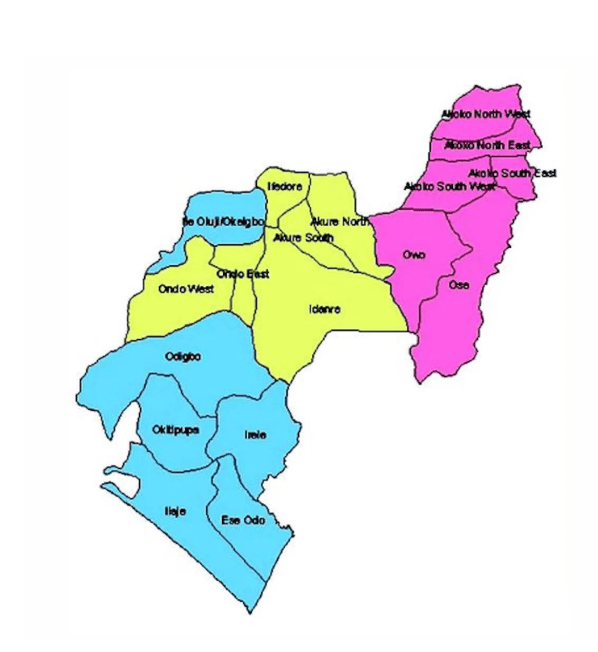
Best Regions/LGAs for Production
Primary LGA: Ovia South-West
Represents Edo State's premier oil palm-producing zone, hosting Okomu Oil Palm Company's extensive plantations and processing facilities. Benefits from optimal southern zone conditions with high rainfall and suitable soils.
Secondary LGA: Ovia North-East
Ranks as Edo's second-most important oil palm zone, distinguished by hosting Presco Plc's large-scale commercial plantations demonstrating international best practices in plantation management and processing.
Tertiary LGA: Uhunmwonde
Positioned in the central part of southern Edo, offers advantages through good road connectivity and proximity to Benin City. Strategic location facilitates access to inputs, technical services, and markets.
Growing Conditions
Climate
Humid tropical climate in southern zone with adequate year-round rainfall. Bimodal rainfall pattern supports oil palm cultivation, though slightly less rainfall than Rivers and Akwa Ibom states.
Soil Type
Deep, well-drained forest soils with good physical properties. Sandy-loam to clay-loam textures, pH 5.0-6.5, moderate organic matter.
Rainfall
Annual precipitation 1,800-2,200mm in southern zone, adequate for oil palm though at lower end of optimal range. Seasonal distribution requires attention to moisture management.
Temperature
Suitable year-round temperatures 26-28°C mean annual. Slightly greater temperature variation than Rivers State but within acceptable range.
Altitude
Production occurs at 50-200 meters above sea level. Gently rolling terrain provides good drainage while maintaining suitable conditions.
Water Availability
Adequate wet season rainfall with brief dry season requiring some moisture management. Rivers and streams provide water for processing facilities.
Project Implementation Strategy
Phase 1: Land Acquisition & Preparation (Months 1-9)
Secure suitable land through community negotiations or long-term leases. Conduct comprehensive soil surveys. Clear land selectively preserving beneficial trees. Establish road networks and drainage systems.
Phase 2: Nursery & Planting (Months 10-18)
Establish nursery with certified Tenera hybrid seedlings. Plant 9-12 month seedlings at 9m triangular spacing (143 palms/hectare). Plant cover crops (legumes) to control erosion and improve soil fertility.
Phase 3: Immature Phase Management (Months 19-48)
Implement intensive weed control and fertilization program. Establish intercropping with cassava, maize, or vegetables during first 3 years. Monitor pests and diseases, implementing integrated pest management.
Phase 4: First Harvest & Processing (Months 49-60)
Begin harvesting at 30-36 months with initial yields 6-8 tons FFB/hectare. Establish processing arrangements with nearby mills or invest in own small-scale mill (3-5 tons/hour capacity).
Phase 5: Full Production & Optimization (Year 5+)
Achieve peak yields of 20-25 tons FFB/hectare. Optimize harvesting cycles (every 10-14 days). Explore value-addition through palm kernel crushing, refined oil production, or oleochemical manufacturing.
KEY ADVANTAGES & SUCCESS FACTORS
Established Industry Presence
Nigeria's largest commercial plantations demonstrate best practices and provide technical expertise
Infrastructure & Market Access
Excellent road connectivity to Lagos (200-250km) reduces transportation costs and provides access to premium markets
Land Availability
Substantial areas of suitable land available at competitive prices (₦80,000-220,000/hectare for long-term leases)
Technical Support
Strong extension services and access to improved planting materials from NIFOR
Government Support
State programs provide subsidized inputs, tax incentives, and infrastructure support
Conclusion
Oil palm represents Nigeria's most significant agricultural investment opportunity, combining strong domestic demand, proven production potential, and government support. Rivers State offers optimal conditions and infrastructure for commercial production. Akwa Ibom provides similar agro-ecological advantages with strong government support and lower land costs. Edo State combines favorable southern zone conditions with superior market access to Lagos and established industry presence demonstrating best practices.