
INTEGRATED CROP PROJECT
Commodity Overview
The Integrated Crop Project represents a strategic agricultural opportunity combining four high-value crops—honey beans, watermelon, onions, and peppers—into a coordinated farming system that maximizes land productivity, spreads risk across multiple crops, optimizes labor utilization throughout the year, and captures premium pricing opportunities from Nigeria's highland temperate zones. This integrated approach leverages the unique climatic advantages of elevated agricultural regions (1,000-1,800 meters) where cooler temperatures, adequate rainfall, and fertile soils enable production of crops that command premium prices due to superior quality and counter-seasonal availability.
The economic significance of integrated crop farming extends beyond individual crop revenues to encompass synergistic benefits including year-round income generation (different crops mature at different times), efficient resource utilization (shared infrastructure, labor, and inputs), risk diversification (multiple income streams reduce dependence on single crop), and premium pricing (highland-grown crops command higher prices due to superior quality). Honey beans command prices 40-60% higher than standard cowpeas, onions produced during the rainy season capture premium prices when northern dry season production is impossible, watermelons harvested during the hot lowland season command premium prices, and peppers benefit from cooler temperatures producing superior quality.
Nigeria's highland agricultural potential remains significantly underutilized despite possessing suitable elevated zones across multiple states. This integrated crop project model demonstrates how coordinated multi-crop farming systems can unlock highland agricultural potential while providing sustainable livelihoods for farming communities. Recent government initiatives support infrastructure investment and market facilitation to enable commercial-scale integrated farming operations across highland regions.
INTEGRATED CROP SYSTEM OVERVIEW
THE FOUR CROPS
1. HONEY BEANS
- Characteristics: Distinctive cream-colored beans with superior taste, texture, and cooking properties commanding 40-60% premium over standard cowpeas
- Growing Period: 90-120 days from planting to harvest
- Planting Season: April-May (onset of rains)
- Harvest Season: August-October (peak demand period)
- Market Price: ₦800-1,200 per kg (vs. ₦500-700 per kg for standard cowpeas)
2. WATERMELON
- Characteristics: Large, sweet watermelons benefiting from highland cool nights and warm days, producing excellent sugar content and flavor
- Growing Period: 80-100 days from planting to harvest
- Planting Season: March-May (warm season)
- Harvest Season: June-August (hot lowland season when demand peaks)
- Market Price: ₦150-300 per kg (premium pricing during hot season)
3. ONIONS
- Characteristics: High-quality bulb onions produced during rainy season when northern dry season production is impossible, capturing premium off-season pricing
- Growing Period: 120-150 days from transplanting to harvest
- Planting Season: June-July (nursery), August-September (transplanting)
- Harvest Season: November-January (off-season when prices peak)
- Market Price: ₦400-800 per kg (off-season premium vs. ₦200-400 per kg during northern harvest season)
4. PEPPERS
- Characteristics: Premium quality peppers benefiting from cool temperatures reducing disease pressure and improving color, flavor, and shelf life
- Growing Period: 90-120 days from transplanting to first harvest, continuous harvesting for 3-6 months
- Planting Season: March-April (nursery), May-June (transplanting)
- Harvest Season: August-December (continuous harvesting)
- Market Price: ₦500-1,000 per kg for bell peppers, ₦800-1,500 per kg for hot peppers
INTEGRATION BENEFITS
Complementary Planting Schedules: The four crops have staggered planting and harvesting periods enabling year-round farm activity and continuous income generation. Watermelon (March-August) → Honey Beans (April-October) → Peppers (May-December) → Onions (August-January) create overlapping production cycles ensuring consistent cash flow.
Efficient Resource Utilization: Shared infrastructure (irrigation systems, storage facilities, processing equipment), labor (permanent workforce utilized year-round rather than seasonal hiring), and inputs (bulk purchasing of fertilizers, pesticides, and other inputs) reduce per-unit costs across all crops.
Risk Diversification: Multiple crops reduce dependence on single commodity, spreading market risk, weather risk, and pest/disease risk across diverse production systems. If one crop faces challenges, others provide income stability.
Soil Health Management: Crop rotation and intercropping systems (honey beans as legume fix nitrogen benefiting subsequent crops, different root depths utilize soil nutrients efficiently) maintain soil fertility and reduce pest/disease buildup compared to monoculture systems.
Market Positioning: Integrated production enables marketing as "Highland Premium Products" creating brand recognition and premium pricing across all crops. Buyers seeking quality highland honey beans also purchase watermelons, onions, and peppers from same supplier.
Top 3 Producing States
1. Taraba State
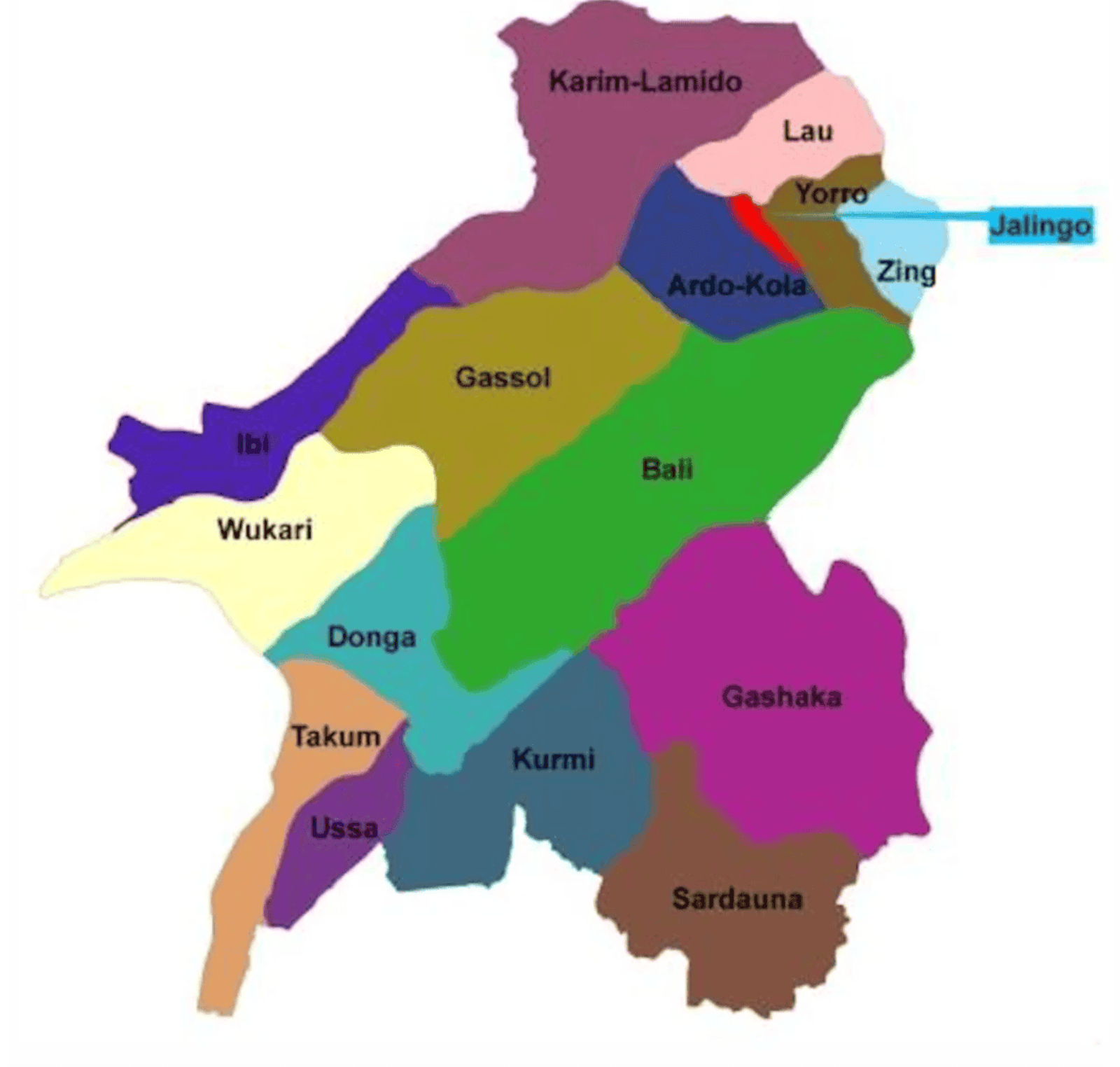
Taraba State Map
Best Regions/LGAs for Production
Primary LGA: Sardauna
Represents Taraba State's premier integrated crop production zone, encompassing the highest elevations (1,500-1,800m) and most extensive highland agricultural areas. Benefits from optimal temperate conditions for all four crops, fertile volcanic soils, and established farming communities with generations of highland agriculture experience. The area's higher elevation provides coolest temperatures ideal for onions and honey beans, while protected valleys offer warmer microclimates suitable for watermelon and peppers.
Secondary LGA: Kurmi
Ranks as Taraba's second-most productive zone, distinguished by its location on the highland eastern edge providing good road connectivity while maintaining suitable elevation (1,400-1,600m) for all four crops. The area's transitional position creates diverse microclimates enabling optimization of crop placement (cooler areas for onions and honey beans, warmer areas for watermelon and peppers).
Tertiary LGA: Gashaka
Positioned on the southern highland slopes, offers transitional conditions between highland and lowland zones. The area's varied elevation (1,200-1,500m) enables production of both temperate and tropical crops, providing diversification opportunities. Lower elevations (1,200-1,400m) are particularly suitable for watermelon and peppers, while higher elevations (1,400-1,500m) support honey beans and onions.
Growing Conditions

Climate
Temperate highland climate with cool temperatures (15-25°C) year-round, high rainfall (1,500-2,000mm annually), and high humidity. Distinct wet season (April-October) and cooler dry season (November-March) enable diverse crop production cycles.

Soil Type
Fertile volcanic soils (Andisols) with excellent structure, high organic matter (5-10%), and good water retention. pH 5.5-6.5, deep soils (>1 meter) support diverse crop root systems. Volcanic soils provide excellent fertility for all four crops with minimal fertilization.

Rainfall
Annual precipitation 1,500-2,000mm, among the highest in Nigeria. Excellent distribution across 8-9 months enables multiple cropping cycles per year. Adequate rainfall for all four crops with supplemental irrigation during dry season.

Temperature
Cool temperatures 15-25°C year-round, unique in Nigeria. Cooler dry season (12-20°C) enables production of onions requiring cold temperatures for bulb formation. Warmer wet season (18-25°C) supports watermelon, honey beans, and peppers.

Altitude
Elevation 1,400-1,800 meters creates temperate conditions. Higher elevations (1,600-1,800m) have coolest temperatures ideal for onions and honey beans, lower elevations (1,400-1,600m) have warmer conditions suitable for watermelon and peppers.

Water Availability
Abundant year-round rainfall and numerous streams provide excellent water availability. Supplemental irrigation during dry season (November-March) extends production for onions and peppers.
Project Implementation Strategy
Phase 1: Site Selection & Infrastructure Development (Months 1-6)
Secure suitable land (minimum 10-20 hectares for viable integrated operation) through community negotiations or long-term leases. Conduct comprehensive site assessment including soil testing, water source identification, and microclimate mapping to optimize crop placement. Develop basic infrastructure including access roads, water storage and irrigation systems, post-harvest handling facilities, and worker housing if needed.
Phase 2: Year 1 Production Cycle (Months 7-18)
Establish integrated cropping system with staggered planting: watermelon (March-May), honey beans (April-June), peppers (May-June transplanting), onions (August-September transplanting). Implement coordinated management across all crops. Begin harvesting watermelon (June-August), honey beans (August-October), peppers (August-December), onions (November-January). Market products during peak demand periods for premium pricing.
Phase 3: Year 2+ Optimization & Scaling (Months 19-36)
Refine crop placement based on first year's performance. Optimize planting schedules to maximize labor efficiency and market timing. Implement crop rotation systems. Invest in value-addition infrastructure. Develop direct marketing relationships. Scale production gradually as systems are proven and markets established.
Phase 4: Market Development & Brand Building (Ongoing)
Establish "Highland Premium Products" brand identity across all four crops. Develop marketing materials highlighting unique temperate conditions and superior quality. Create direct relationships with high-end retailers, restaurants, and food processors. Explore export opportunities. Implement quality control and traceability systems.
Phase 5: Sustainability & Community Integration (Ongoing)
Implement sustainable farming practices including organic matter recycling, integrated pest management, water conservation, and erosion control. Develop outgrower programs enabling smallholder farmers to participate. Create employment opportunities for local communities. Invest in community infrastructure to build long-term social license.
KEY ADVANTAGES & SUCCESS FACTORS
Unique Temperate Climate
Highland zones enable all four crops with premium quality impossible in lowland areas
Year-Round Income
Staggered planting and harvesting schedules provide continuous cash flow across all seasons
Risk Diversification
Four crops spread market, weather, and pest/disease risks across diverse production systems
Premium Quality & Pricing
Cool temperatures and fertile soils produce superior quality commanding premium prices
Efficient Resource Use
Shared infrastructure, labor, and inputs reduce per-unit costs compared to single-crop systems
2. Plateau State
Plateau State secures the second position for integrated highland crop production through favorable elevation (1,200-1,400 meters), suitable climate for three of the four crops (onions, peppers, and watermelon), and superior infrastructure. While Plateau's elevation is lower than Taraba's highest zones (creating warmer temperatures limiting honey bean production), its excellent road connectivity, proximity to major markets, and established agricultural infrastructure create competitive advantages.
Plateau State's competitive advantage for integrated crop farming stems from strategic location in central Nigeria providing access to both northern and southern markets, good road infrastructure reducing transportation costs, established agricultural support services (research institutions, extension services, input suppliers), and large urban market in Jos creating strong local demand for fresh vegetables.
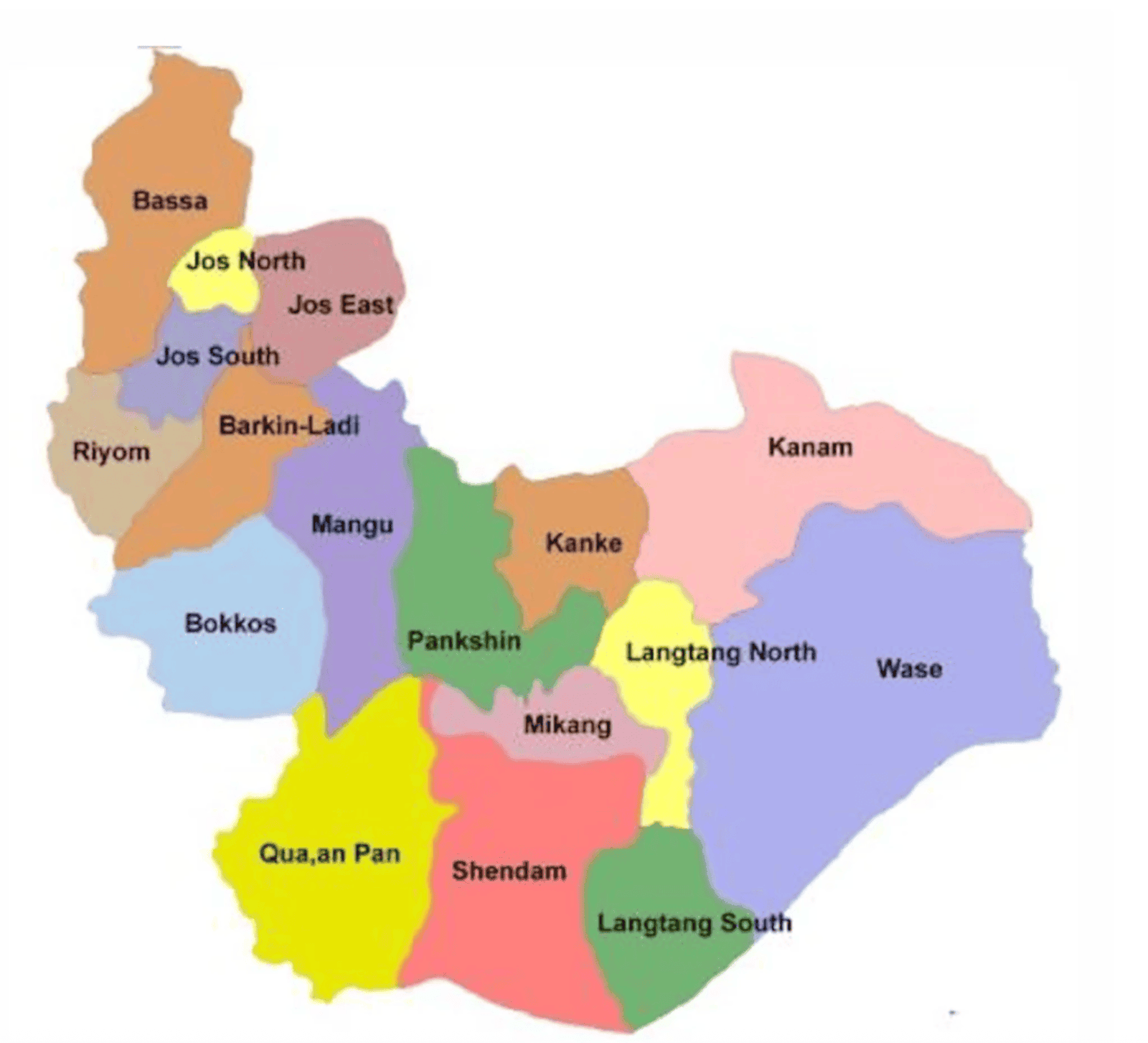
Plateau State Map
Best Regions/LGAs for Production
Primary LGA: Jos South
Represents Plateau State's premier integrated crop production zone, benefiting from optimal elevation (1,200-1,400m), good road connectivity, and proximity to Jos's urban market. The area's volcanic soils and adequate rainfall support diverse crop production, with focus on onions and peppers for local and regional markets.
Secondary LGA: Barkin-Ladi
Ranks as Plateau's second-most productive highland zone, distinguished by its higher elevation (1,300-1,500m) creating cooler temperatures more suitable for onions. The area's extensive agricultural lands and established farming communities support commercial integrated crop production.
Tertiary LGA: Bassa
Positioned at transitional elevation (1,000-1,300m), offers advantages through good road connectivity and proximity to markets. The warmer temperatures at lower elevations are particularly suitable for watermelon and peppers.
Growing Conditions
Climate
Highland tropical climate with cool to moderate temperatures (18-28°C), adequate rainfall (1,000-1,400mm annually), and distinct wet and dry seasons.
Soil Type
Volcanic soils with good structure and fertility. pH 5.5-6.5, adequate depth and drainage for diverse crop production.
Rainfall
Annual precipitation 1,000-1,400mm adequate for crop production with supplemental irrigation during dry season.
Temperature
Cool to moderate temperatures 18-28°C. Suitable for onions, peppers, and watermelon with appropriate variety selection.
Altitude
Elevation 1,200-1,400 meters creates highland conditions suitable for three-crop integrated system.
Water Availability
Adequate rainfall during wet season. Irrigation infrastructure enables dry season production.
Project Implementation Strategy
Phase 1: Site Selection & Infrastructure Development (Months 1-6)
Secure suitable land (minimum 10-20 hectares for viable integrated operation) through community negotiations or long-term leases. Conduct comprehensive site assessment including soil testing, water source identification, and microclimate mapping to optimize crop placement. Develop basic infrastructure including access roads, water storage and irrigation systems, post-harvest handling facilities, and worker housing if needed.
Phase 2: Year 1 Production Cycle (Months 7-18)
Establish integrated cropping system with staggered planting: watermelon (March-May), honey beans (April-June), peppers (May-June transplanting), onions (August-September transplanting). Implement coordinated management across all crops. Begin harvesting watermelon (June-August), honey beans (August-October), peppers (August-December), onions (November-January). Market products during peak demand periods for premium pricing.
Phase 3: Year 2+ Optimization & Scaling (Months 19-36)
Refine crop placement based on first year's performance. Optimize planting schedules to maximize labor efficiency and market timing. Implement crop rotation systems. Invest in value-addition infrastructure. Develop direct marketing relationships. Scale production gradually as systems are proven and markets established.
Phase 4: Market Development & Brand Building (Ongoing)
Establish "Highland Premium Products" brand identity across all four crops. Develop marketing materials highlighting unique temperate conditions and superior quality. Create direct relationships with high-end retailers, restaurants, and food processors. Explore export opportunities. Implement quality control and traceability systems.
Phase 5: Sustainability & Community Integration (Ongoing)
Implement sustainable farming practices including organic matter recycling, integrated pest management, water conservation, and erosion control. Develop outgrower programs enabling smallholder farmers to participate. Create employment opportunities for local communities. Invest in community infrastructure to build long-term social license.
KEY ADVANTAGES & SUCCESS FACTORS
Superior Infrastructure
Market Access
Strategic central location and proximity to Jos urban market provides strong local demand
Agricultural Support Services
Established research institutions, extension services, and input suppliers
Lower Logistics Costs
Better infrastructure reduces transportation costs enabling competitive pricing
Year-Round Production
Irrigation infrastructure enables dry season production for continuous income
3. Adamawa State
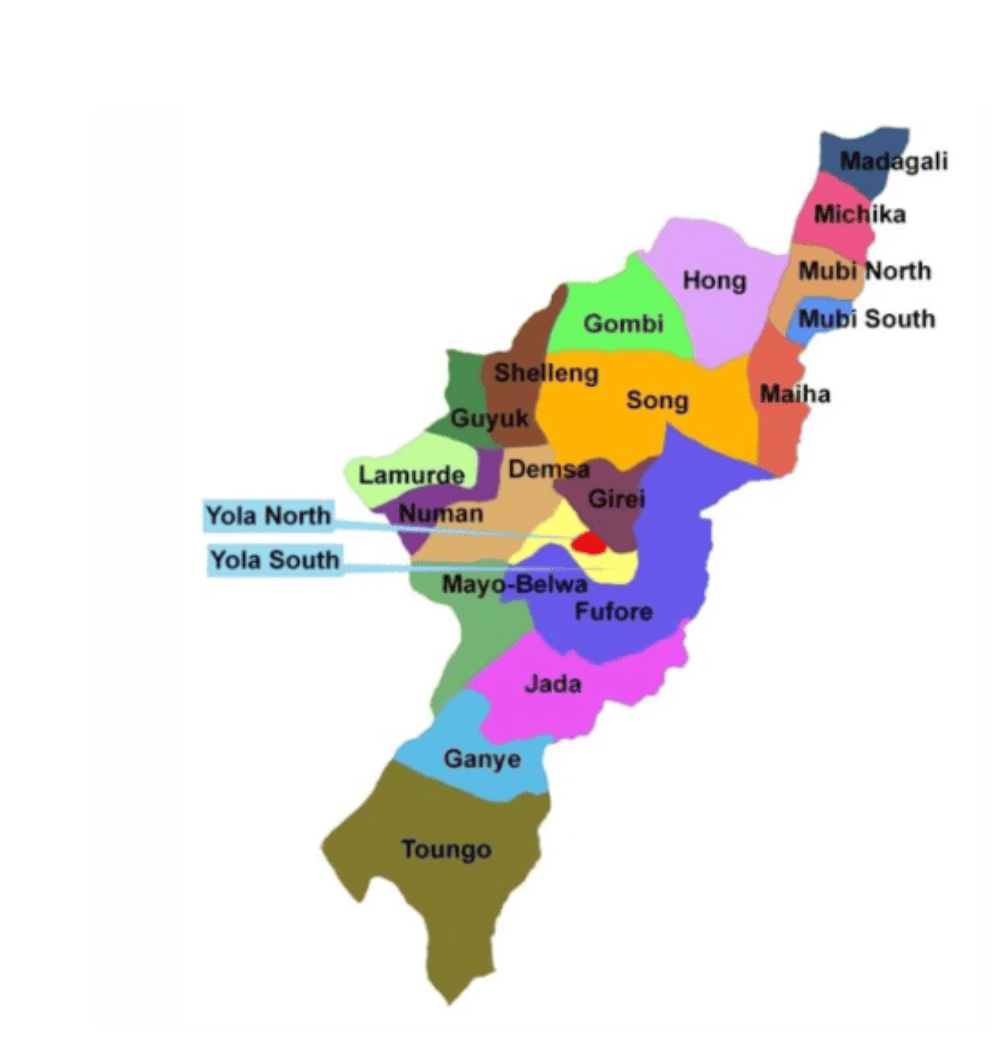
Adamawa State Map
Best Regions/LGAs for Production
Primary LGA: Kano Jada
Represents Adamawa's premier highland crop production zone, benefiting from suitable elevation (1,200-1,400m). The area's adequate rainfall and appropriate soils support watermelon and pepper production.
Secondary LGA: Mayo-Belwa
Ranks as Adamawa's second-most productive highland zone, distinguished by its transitional elevation (1,000-1,300m) and good road connectivity. The area offers balance between suitable growing conditions and market access.
Tertiary LGA: Ganye
Positioned in the southern highlands, offers suitable elevation (1,000-1,200m) and adequate rainfall. The area's lower population density provides land availability at competitive prices.
Growing Conditions
Climate
Highland tropical climate with moderate temperatures (20-30°C), adequate rainfall (1,000-1,500mm annually).
Soil Type
Varied soils from volcanic soils in higher elevations to loam soils. pH 5.5-6.5, adequate fertility.
Rainfall
Annual precipitation 1,000-1,500mm adequate for watermelon and pepper production
Temperature
Moderate to warm temperatures 20-30°C suitable for watermelon and peppers
Altitude
Elevation 1,000-1,400 meters sufficient for two-crop integrated system.
Water Availability
Adequate rainfall during wet season with access to streams for supplemental irrigation.
Project Implementation Strategy
Phase 1: Site Selection & Infrastructure Development (Months 1-6)
Secure suitable land (minimum 10-20 hectares for viable integrated operation) through community negotiations or long-term leases. Conduct comprehensive site assessment including soil testing, water source identification, and microclimate mapping to optimize crop placement. Develop basic infrastructure including access roads, water storage and irrigation systems, post-harvest handling facilities, and worker housing if needed.
Phase 2: Year 1 Production Cycle (Months 7-18)
Establish integrated cropping system with staggered planting: watermelon (March-May), honey beans (April-June), peppers (May-June transplanting), onions (August-September transplanting). Implement coordinated management across all crops. Begin harvesting watermelon (June-August), honey beans (August-October), peppers (August-December), onions (November-January). Market products during peak demand periods for premium pricing.
Phase 3: Year 2+ Optimization & Scaling (Months 19-36)
Refine crop placement based on first year's performance. Optimize planting schedules to maximize labor efficiency and market timing. Implement crop rotation systems. Invest in value-addition infrastructure. Develop direct marketing relationships. Scale production gradually as systems are proven and markets established.
Phase 4: Market Development & Brand Building (Ongoing)
Establish "Highland Premium Products" brand identity across all four crops. Develop marketing materials highlighting unique temperate conditions and superior quality. Create direct relationships with high-end retailers, restaurants, and food processors. Explore export opportunities. Implement quality control and traceability systems.
Phase 5: Sustainability & Community Integration (Ongoing)
Implement sustainable farming practices including organic matter recycling, integrated pest management, water conservation, and erosion control. Develop outgrower programs enabling smallholder farmers to participate. Create employment opportunities for local communities. Invest in community infrastructure to build long-term social license.
KEY ADVANTAGES & SUCCESS FACTORS
Lower Production Costs
Land and labor costs significantly lower improving investment returns
Good Road Connectivity
Better infrastructure reduces transportation costs to major markets
Expansion Potential
Underdeveloped highland areas create first-mover advantages
Two-Crop Diversification
Watermelon and pepper production provides risk diversification
Government Support
State agricultural programs support highland agriculture development
Conclusion
The Integrated Crop Project represents a strategic agricultural opportunity combining four high-value crops into a coordinated farming system that maximizes highland climatic advantages. Taraba State offers optimal conditions for all four crops with unmatched quality potential. Plateau State provides suitable conditions for three-crop systems with superior infrastructure and market access. Adamawa State demonstrates frontier opportunities for two-crop systems with lower costs and expansion potential. The integrated approach provides year-round income, risk diversification, efficient resource utilization, and premium brand positioning across all production locations.