
SESAME
Commodity Overview
Sesame (Sesamum indicum) ranks as Nigeria's leading agricultural export commodity by value, with annual exports exceeding 500,000 metric tons generating over $600 million in foreign exchange earnings. Nigeria's position as Africa's largest sesame producer and the world's third-largest exporter (after India and Sudan) reflects the crop's exceptional adaptation to the country's Middle Belt and northern regions where semi-arid conditions, suitable soils, and appropriate temperatures create ideal growing environments.
The economic significance of sesame cultivation extends beyond export earnings to encompass employment generation for rural communities across Nigeria's food-insecure northern regions, where sesame farming provides income to over 600,000 households. Sesame's exceptional drought tolerance, minimal input requirements (thriving on marginal soils with limited fertilization), short growing cycle (90-120 days from planting to harvest), and high value-to-weight ratio facilitating transportation and export logistics create attractive investment opportunities for both smallholder and commercial producers.
Nigeria's sesame production potential remains significantly underutilized despite possessing over 2 million hectares of suitable land across Middle Belt and northern states. Recent government initiatives including the Export Expansion Grant Program and various state-level sesame development programs have provided support for production expansion, quality improvement, and market access facilitation to international buyers in Japan, China, Turkey, and European markets.
Nigeria's Sesame Production Zones
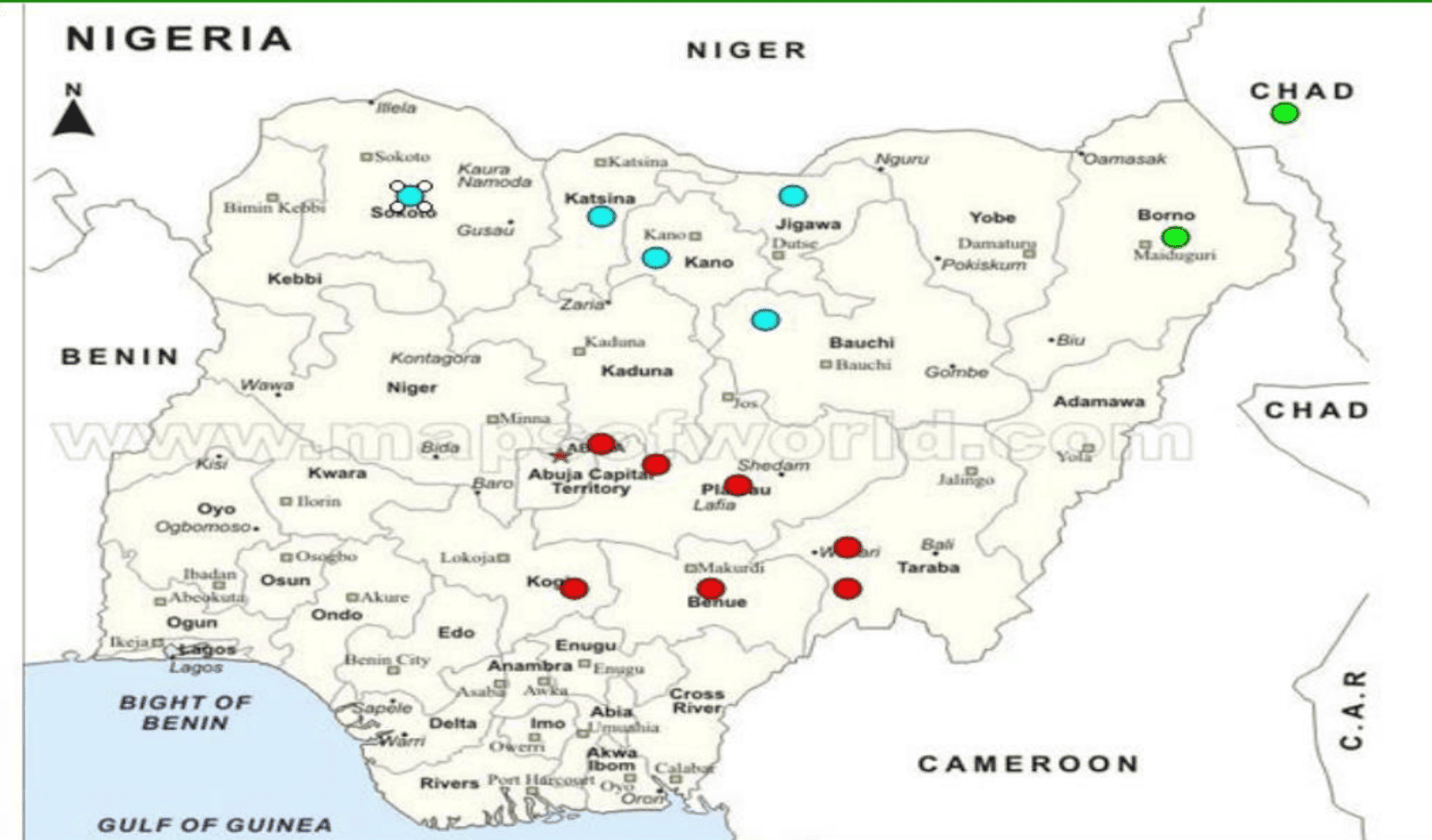
Top 3 Producing States
1. Benue State
Benue State commands the premier position among Nigeria's sesame producing states through optimal agro-ecological conditions, established farming expertise, and superior infrastructure facilitating export logistics. The state accounts for approximately 35% of national sesame production, producing over 175,000 metric tons annually from roughly 250,000 hectares under cultivation.
Benue's competitive advantage stems from its location in the Middle Belt with suitable rainfall patterns (1,000-1,400mm annually distributed across a single rainy season), well-drained sandy-loam to loam soils ideal for sesame cultivation, and appropriate temperatures. The state's nickname "Food Basket of the Nation" reflects its agricultural productivity and creates positive associations for agricultural investments.
The state hosts the highest concentration of sesame buying agents and export companies in Nigeria, with dozens of licensed buying agents representing international traders and local export companies. Makurdi (state capital) serves as Nigeria's primary sesame trading hub with established market infrastructure, quality testing facilities, and export logistics connections.
Benue State Map
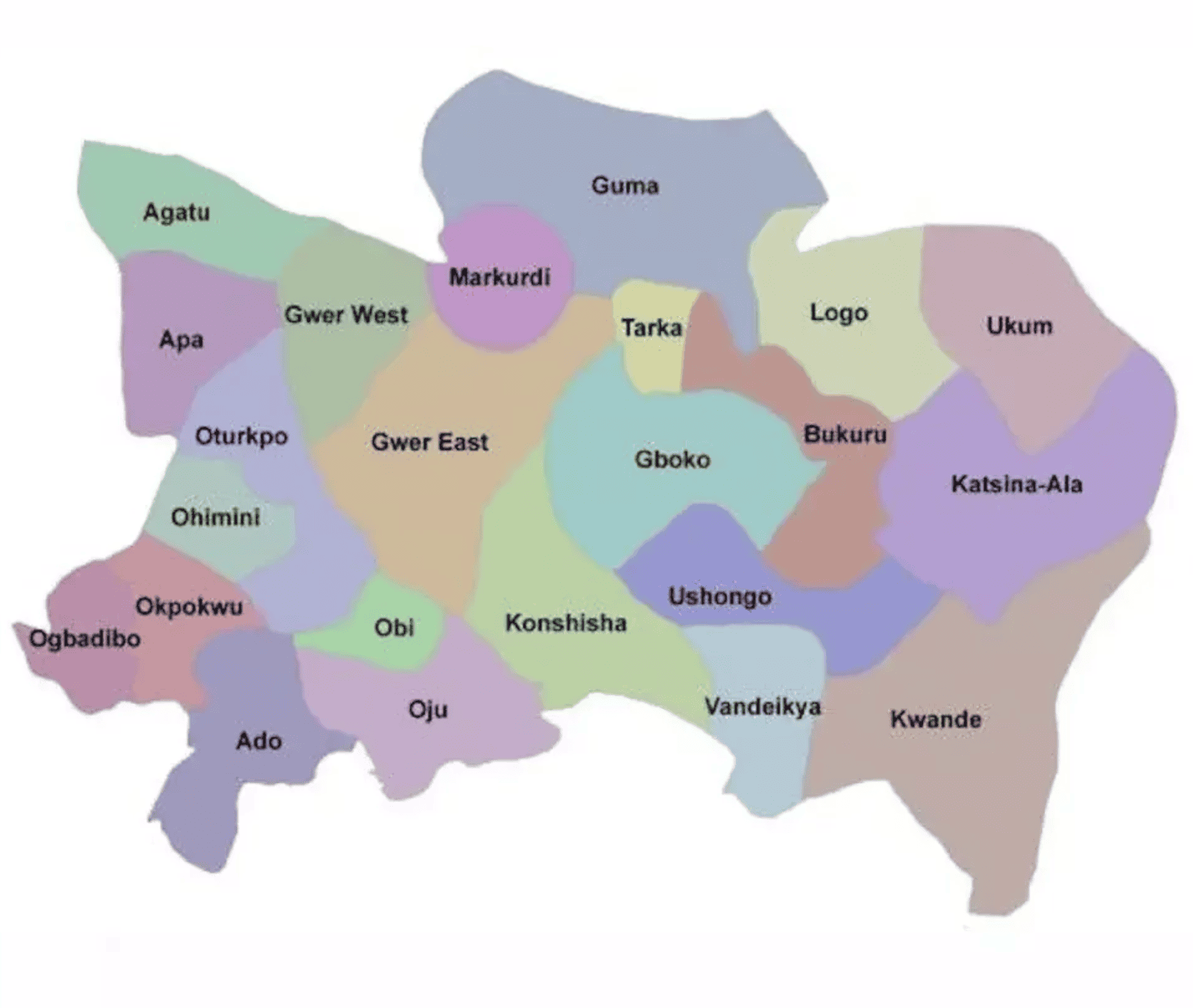
Best Regions/LGAs for Production
Primary LGA: Makurdi
Represents Benue State's premier sesame-producing zone and Nigeria's primary sesame trading hub. Located in central Benue with suitable rainfall (1,100-1,300mm annually), well-drained soils, and excellent road connectivity facilitating export logistics. Hosts the highest concentration of sesame buying agents and export companies.
Secondary LGA: Gboko
Ranks as Benue's second-most productive sesame zone, distinguished by its extensive areas of suitable land and established farming traditions. The area's good road connectivity to Makurdi (50km) facilitates market access while maintaining lower land costs than the state capital.
Tertiary LGA: Otukpo
Positioned in southern Benue with suitable rainfall and appropriate soils for sesame cultivation. The area's lower population density provides land availability for commercial-scale operations at competitive prices while maintaining good road access to Makurdi.
Positioned in southern Benue with suitable rainfall and appropriate soils for sesame cultivation. The area's lower population density provides land availability for commercial-scale operations at competitive prices while maintaining good road access to Makurdi.
Growing Conditions

Climate
Tropical savanna climate with single rainy season (April-October) and dry season (November-March). Adequate rainfall during growing season, dry conditions during harvest facilitate seed drying and quality preservation.
Soil Type
Well-drained sandy-loam to loam soils with good structure and adequate depth. pH 5.5-7.0 suitable for sesame. Good drainage essential as sesame is sensitive to waterlogging.

Rainfall
Annual precipitation 1,000-1,400mm concentrated in single rainy season. Adequate for sesame's 90-120 day growing cycle. Dry season facilitates harvest and post-harvest processing.

Temperature
Warm temperatures 25-30°C during growing season ideal for sesame. Sesame tolerates high temperatures (up to 40°C) better than most crops, making it well-suited to tropical regions.

Altitude
Production at 100-400 meters elevation. Relatively flat terrain facilitates mechanization and large-scale operations.

Water Availability
Adequate rainfall during growing season eliminates irrigation needs. Sesame's exceptional drought tolerance allows successful production even with irregular rainfall. Dry season facilitates seed drying and storage.
Project Implementation Strategy
Phase 1: Land Preparation & Seed Procurement (Months 1-2)
Select suitable site with well-drained sandy-loam to loam soils, flat to gently rolling terrain suitable for mechanization, and good road access for export logistics. Conduct plowing (15-20cm depth) and harrowing to prepare fine seedbed. Source quality sesame seed (3-5 kg per hectare) from reputable suppliers or previous season's harvest.
Phase 2: Planting & Early Growth (Months 3-4)
Plant at onset of rains (April-May) when soil moisture adequate. Plant in rows 50-75cm apart with 10-15cm spacing within rows. Apply minimal fertilizer (NPK 15-15-15 at 100-200 kg per hectare) if soil fertility is very low; sesame thrives on marginal soils with minimal inputs. Implement weed control during first 30-45 days when sesame is poor competitor.
Phase 3: Vegetative Growth & Flowering (Months 5-6)
Monitor plant growth and flowering. Sesame requires minimal management during this phase. Implement pest monitoring for sesame webworm, leaf-eating caterpillars, and other pests. Sesame's drought tolerance allows successful production even with irregular rainfall during this phase.
Phase 4: Maturation & Harvesting (Months 7-8)
Monitor plant maturity (yellowing and drying of leaves and capsules indicates harvest readiness). Harvest when 70-80% of capsules have turned brown but before capsules shatter and release seeds. Cut plants and bundle for field drying (3-7 days). Thresh dried plants to extract seeds. Expect yields of 400-800 kg per hectare (national average 300-500 kg per hectare; improved varieties and good management achieve 600-800 kg per hectare).
Phase 5: Processing & Marketing (Months 9-10)
Clean harvested seeds to remove plant debris and foreign matter. Dry seeds to 6-8% moisture content for safe storage and export. Sort and grade seeds by size and color (white sesame commands premium prices). Package for export (typically 50kg jute bags or 25kg polypropylene bags). Market through export companies, buying agents, or direct export relationships.
KEY ADVANTAGES & SUCCESS FACTORS
Optimal Growing Conditions
Suitable rainfall, temperature, and soil conditions create natural competitive advantages
Established Export Infrastructure
Highest concentration of sesame buying agents and export companies ensures competitive pricing and market access
Strategic Location
Makurdi serves as Nigeria's primary sesame trading hub with established market infrastructure
Technical Expertise
Decades of sesame cultivation create deep knowledge base and skilled labor availability
Premium Export Pricing
Quality sesame commands $1,200-1,800 per ton in international markets
2. Nasarawa State
Nasarawa State secures the second position among Nigeria's sesame producing states through favorable agro-ecological conditions similar to Benue State, lower land costs, and growing export infrastructure. The state accounts for approximately 25% of national sesame production, producing over 125,000 metric tons annually.
Nasarawa's competitive advantage stems from suitable rainfall patterns (900-1,200mm annually), appropriate soils, and strategic location with good road access to Makurdi's export infrastructure and Abuja's commercial services. The state's sesame production is expanding rapidly as farmers recognize the crop's profitability and export buyers establish presence.
Nasarawa State Map
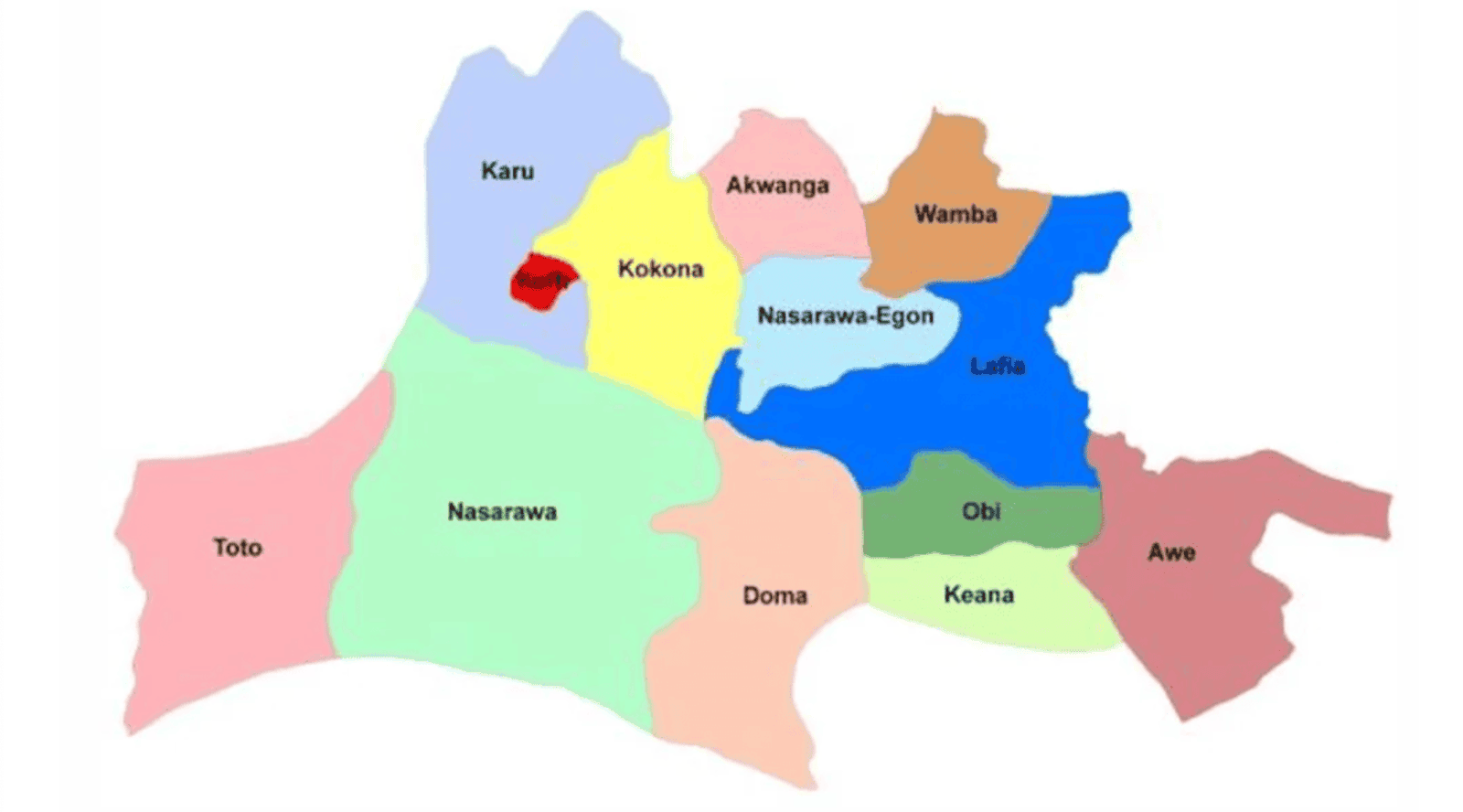
Best Regions/LGAs for Production
Primary LGA: Lafia
Represents Nasarawa State's premier sesame-producing zone and state capital, benefiting from suitable rainfall (1,000-1,200mm annually), well-drained soils, and good road connectivity to Makurdi (80km) and Abuja (100km). Hosts growing concentration of sesame buying agents.
Secondary LGA: Keana
Ranks as Nasarawa's second-most productive sesame zone, distinguished by its extensive areas of suitable land and lower population density. The area's suitable growing conditions and land availability at competitive prices attract commercial sesame investments.
Tertiary LGA: Obi
Positioned in the southern part of the state with suitable rainfall and appropriate soils for sesame cultivation. The area's proximity to Benue State provides access to Makurdi's export infrastructure while maintaining lower land costs.
Growing Conditions
Climate
Tropical savanna climate with single rainy season similar to Benue State. Adequate rainfall during growing season, dry conditions during harvest.
Soil Type
Well-drained sandy-loam to loam soils suitable for sesame. pH 5.5-7.0, good drainage essential. Similar soil conditions to Benue State.
Rainfall
Annual precipitation 900-1,200mm adequate for sesame cultivation. Slightly lower rainfall than Benue State but sufficient given sesame's drought tolerance.
Temperature
Warm temperatures 25-30°C during growing season. Similar temperature regime to Benue State providing optimal conditions.
Altitude
Production at 200-500 meters elevation. Relatively flat to gently rolling terrain facilitates mechanization.
Water Availability
Adequate rainfall during growing season eliminates irrigation needs. Sesame's drought tolerance allows successful production even with irregular rainfall.
Project Implementation Strategy
Phase 1: Land Preparation & Seed Procurement (Months 1-2)
Select suitable site with well-drained sandy-loam to loam soils, flat to gently rolling terrain suitable for mechanization, and good road access for export logistics. Conduct plowing (15-20cm depth) and harrowing to prepare fine seedbed. Source quality sesame seed (3-5 kg per hectare) from reputable suppliers or previous season's harvest.
Phase 2: Planting & Early Growth (Months 3-4)
Plant at onset of rains (April-May) when soil moisture adequate. Plant in rows 50-75cm apart with 10-15cm spacing within rows. Apply minimal fertilizer (NPK 15-15-15 at 100-200 kg per hectare) if soil fertility is very low; sesame thrives on marginal soils with minimal inputs. Implement weed control during first 30-45 days when sesame is poor competitor.
Phase 3: Vegetative Growth & Flowering (Months 5-6)
Monitor plant growth and flowering. Sesame requires minimal management during this phase. Implement pest monitoring for sesame webworm, leaf-eating caterpillars, and other pests. Sesame's drought tolerance allows successful production even with irregular rainfall during this phase.
Phase 4: Maturation & Harvesting (Months 7-8)
Monitor plant maturity (yellowing and drying of leaves and capsules indicates harvest readiness). Harvest when 70-80% of capsules have turned brown but before capsules shatter and release seeds. Cut plants and bundle for field drying (3-7 days). Thresh dried plants to extract seeds. Expect yields of 400-800 kg per hectare (national average 300-500 kg per hectare; improved varieties and good management achieve 600-800 kg per hectare).
Phase 5: Processing & Marketing (Months 9-10)
Clean harvested seeds to remove plant debris and foreign matter. Dry seeds to 6-8% moisture content for safe storage and export. Sort and grade seeds by size and color (white sesame commands premium prices). Package for export (typically 50kg jute bags or 25kg polypropylene bags). Market through export companies, buying agents, or direct export relationships.
KEY ADVANTAGES & SUCCESS FACTORS
Lower Land Costs
Land prices 30-50% lower than Benue State while maintaining similar growing conditions
Strategic Location
Proximity to Makurdi's export infrastructure and Abuja's commercial services
Expansion Potential
Growing sesame production attracts export buyers and creates market opportunities
Government Support
State agricultural programs support sesame production as priority export crop
Similar Growing Conditions
Agro-ecological conditions comparable to Benue State ensure production viability
3. Taraba State
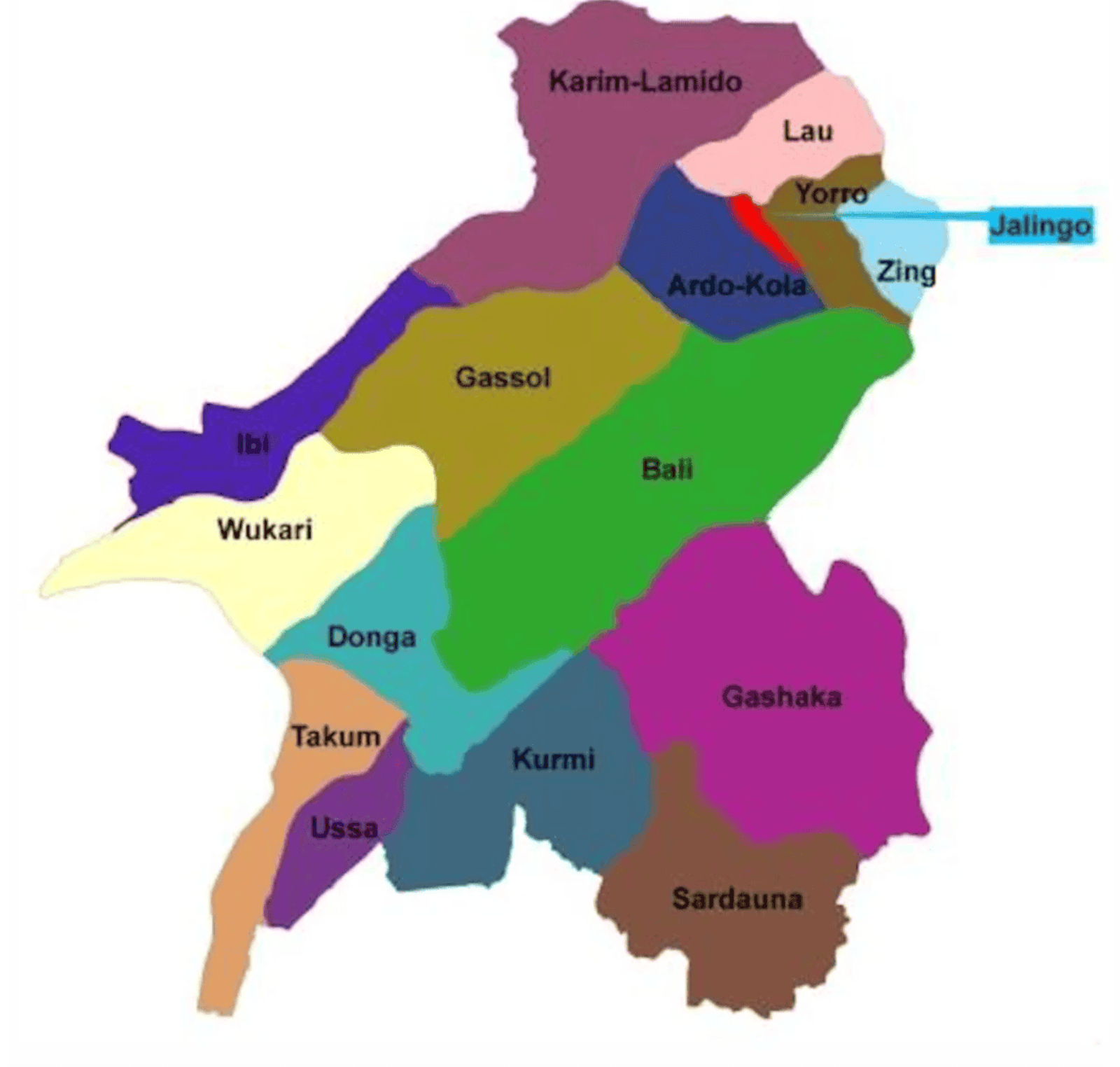
Taraba State Map
Best Regions/LGAs for Production
Primary LGA: Jalingo
Represents Taraba State's premier sesame-producing zone and state capital, benefiting from suitable rainfall (900-1,100mm annually), appropriate soils, and good road connectivity. Hosts growing concentration of sesame buying agents and provides access to commercial services.
Secondary LGA: Ardo-Kola
Ranks as Taraba's second-most productive sesame zone, distinguished by its extensive areas of suitable land and established farming traditions. The area's suitable growing conditions and lower land costs attract commercial sesame investments.
Tertiary LGA: Lau
Positioned in the northern part of the state with suitable conditions for sesame cultivation. The area's lower population density provides land availability for commercial operations at very competitive prices.
Growing Conditions
Climate
Tropical savanna climate with single rainy season. Northern and central zones have adequate rainfall (800-1,100mm annually) for sesame cultivation.
Soil Type
Well-drained sandy-loam to loam soils in northern and central zones suitable for sesame. pH 5.5-7.0, adequate drainage.
Rainfall
Annual precipitation 800-1,100mm in northern and central zones adequate for sesame. Lower rainfall than Benue and Nasarawa states but sufficient given sesame's exceptional drought tolerance.
Temperature
Warm to hot temperatures 25-32°C. Slightly warmer than Benue State but within acceptable range for sesame cultivation.
Altitude
Northern and central zones at 200-600 meters elevation provide suitable conditions.
Water Availability
Adequate rainfall during growing season. Sesame's drought tolerance allows successful production even with lower rainfall.
Project Implementation Strategy
Phase 1: Land Preparation & Seed Procurement (Months 1-2)
Select suitable site with well-drained sandy-loam to loam soils, flat to gently rolling terrain suitable for mechanization, and good road access for export logistics. Conduct plowing (15-20cm depth) and harrowing to prepare fine seedbed. Source quality sesame seed (3-5 kg per hectare) from reputable suppliers or previous season's harvest.
Phase 2: Planting & Early Growth (Months 3-4)
Plant at onset of rains (April-May) when soil moisture adequate. Plant in rows 50-75cm apart with 10-15cm spacing within rows. Apply minimal fertilizer (NPK 15-15-15 at 100-200 kg per hectare) if soil fertility is very low; sesame thrives on marginal soils with minimal inputs. Implement weed control during first 30-45 days when sesame is poor competitor.
Phase 3: Vegetative Growth & Flowering (Months 5-6)
Monitor plant growth and flowering. Sesame requires minimal management during this phase. Implement pest monitoring for sesame webworm, leaf-eating caterpillars, and other pests. Sesame's drought tolerance allows successful production even with irregular rainfall during this phase.
Phase 4: Maturation & Harvesting (Months 7-8)
Monitor plant maturity (yellowing and drying of leaves and capsules indicates harvest readiness). Harvest when 70-80% of capsules have turned brown but before capsules shatter and release seeds. Cut plants and bundle for field drying (3-7 days). Thresh dried plants to extract seeds. Expect yields of 400-800 kg per hectare (national average 300-500 kg per hectare; improved varieties and good management achieve 600-800 kg per hectare).
Phase 5: Processing & Marketing (Months 9-10)
Clean harvested seeds to remove plant debris and foreign matter. Dry seeds to 6-8% moisture content for safe storage and export. Sort and grade seeds by size and color (white sesame commands premium prices). Package for export (typically 50kg jute bags or 25kg polypropylene bags). Market through export companies, buying agents, or direct export relationships.
KEY ADVANTAGES & SUCCESS FACTORS
Lowest Production Costs
Land and labor costs significantly lower than Benue and Nasarawa states improving investment economics
Expansion Potential
Emerging sesame production area creates first-mover advantages for commercial operations
Government Support
State agricultural programs support sesame production as priority export crop
Lower Competition
Less saturated markets compared to Benue State create opportunities for differentiation
Export Potential
Growing production volumes attract export buyers and establish market connections
Conclusion
Sesame represents Nigeria's leading agricultural export commodity combining strong international demand, minimal input requirements, and exceptional drought tolerance. Benue State offers optimal conditions with established export infrastructure and market access. Nasarawa State provides similar growing conditions with lower land costs and strategic location. Taraba State demonstrates frontier opportunities with lowest production costs and expansion potential.