
SPLIT GINGER
Commodity Overview
Split ginger (Zingiber officinale) represents one of Nigeria's most lucrative agricultural export commodities, with the country ranking among the world's top five ginger exporters and African production leader. Annual export volumes exceeding 150,000 metric tons generate over $250 million in foreign exchange earnings, with split ginger (dried, peeled rhizomes) commanding premium prices of $2,500-4,000 per metric ton in international markets—significantly higher than fresh ginger at $800-1,200 per ton.
The economic significance of ginger cultivation extends beyond export earnings to encompass employment generation for rural communities, particularly in Nigeria's Middle Belt states where ginger farming provides income to over 200,000 households. Ginger's relatively short growing cycle (8-10 months from planting to harvest), high value-to-weight ratio facilitating transportation and export logistics, and strong international demand from Asian markets (China, India), European markets (Netherlands, UK), and North American markets (USA, Canada) create attractive investment opportunities for both smallholder and commercial producers.
Nigeria's ginger production potential remains significantly underutilized despite possessing suitable conditions across Middle Belt and northern states where adequate rainfall (1,000-1,500mm annually), appropriate soils, and suitable temperatures create favorable growing conditions. Recent government initiatives including the Export Expansion Grant Program and various state-level ginger development programs have provided support for production expansion, processing infrastructure development, and market access facilitation.
Top 3 Producing States
1. Kaduna State
Kaduna State commands the premier position among Nigeria's ginger producing states through optimal agro-ecological conditions, established farming expertise, and superior infrastructure facilitating export logistics. The state accounts for approximately 40% of national ginger production, producing over 120,000 metric tons annually from roughly 60,000 hectares under cultivation.
Kaduna's competitive advantage stems from its location in the Middle Belt with suitable rainfall patterns (1,000-1,400mm annually), well-drained soils, and appropriate temperatures for ginger cultivation. The state's southern zones provide optimal conditions with adequate moisture during the growing season and dry conditions during harvest facilitating rhizome drying and processing.
The state hosts the highest concentration of ginger processing facilities in Nigeria, with dozens of small-scale processors and several medium-scale operations producing split ginger for export. Kaduna's good road connectivity to Lagos (via Abuja) and proximity to Kano (alternative export route) facilitate efficient movement of processed ginger to export markets.
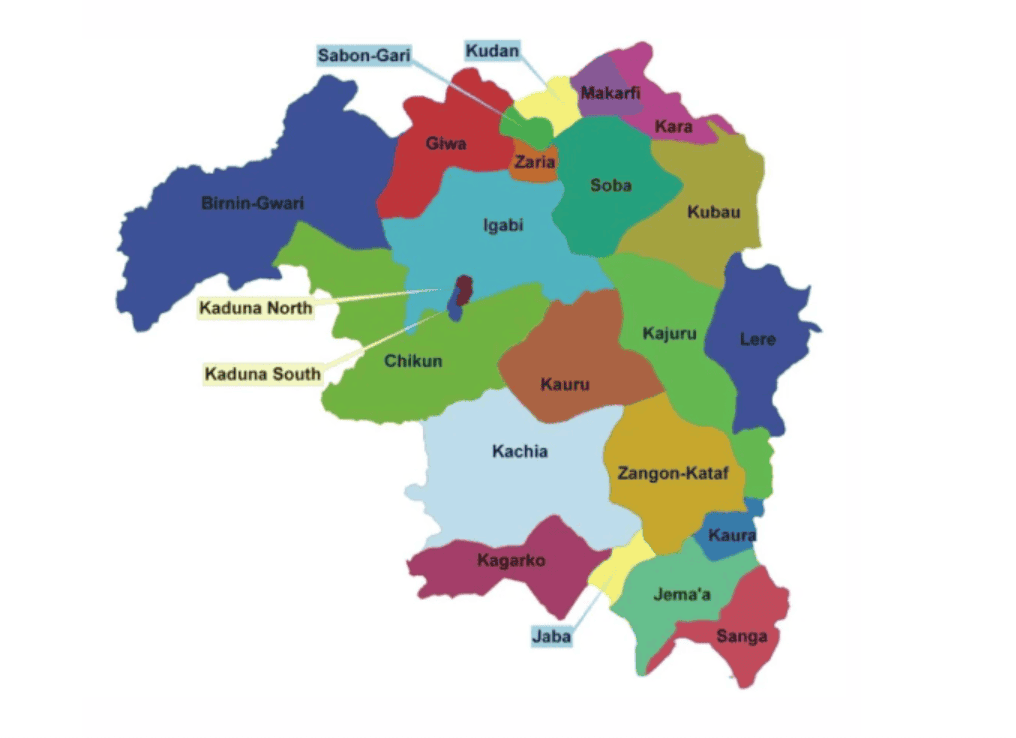
Kaduna State Map
Best Regions/LGAs for Production
Primary LGA: Kachia
Represents Kaduna State's premier ginger-producing zone, contributing over 35% of the state's total output. Located in the southern part of Kaduna State with optimal rainfall (1,200-1,400mm annually), well-drained loam soils, and suitable elevation (600-900m) creating favorable growing conditions.
Secondary LGA: Jema'a
Ranks as Kaduna's second-most productive ginger zone, distinguished by its higher elevation (800-1,000m) creating cooler temperatures and well-distributed rainfall. The area's suitable soils and established ginger farming traditions support high-quality production.
Tertiary LGA: Zangon Kataf
Positioned in the southern highlands, offers suitable elevation, adequate rainfall, and appropriate soils for ginger cultivation. The area's growing ginger production and good road connectivity to processing centers provide market access.
Growing Conditions

Climate
Tropical savanna climate with distinct wet season (May-October) and dry season (November-April). Wet season provides moisture for growth, dry season facilitates harvesting and drying.
Soil Type
Well-drained loam to sandy-loam soils with good structure and adequate depth (30-40cm). pH 5.5-6.5 optimal for ginger. Good drainage essential to prevent rhizome rot.

Rainfall
Annual precipitation 1,000-1,400mm concentrated in wet season. Adequate for ginger's 8-10 month growing cycle. Dry season facilitates harvest and post-harvest processing.

Temperature
Warm temperatures 25-30°C during growing season ideal for ginger. Cooler dry season (20-25°C) occurs during harvest period and does not affect production.

Altitude
Production at 600-1,000 meters elevation provides optimal conditions. Higher elevations have cooler temperatures and better disease management, lower elevations have warmer conditions and faster growth.

Water Availability
Adequate rainfall during growing season eliminates irrigation needs. Dry season conditions facilitate rhizome drying and processing. No irrigation required.
Project Implementation Strategy
Phase 1: Land Preparation & Planting Material (Months 1-2)
Select suitable site with well-drained loam soils, good road access, and proximity to processing facilities or export routes. Conduct deep plowing (30-40cm) and prepare raised beds or ridges (20-30cm high) to ensure good drainage. Source quality seed rhizomes (10-12 tons per hectare) from reputable suppliers or previous season's harvest.
Phase 2: Planting & Early Growth (Months 3-5)
Plant seed rhizomes at onset of rains (April-May) when soil moisture adequate. Plant at 25-30cm spacing on ridges or beds. Apply organic matter (10-15 tons per hectare) and basal fertilizer (NPK 15-15-15 at 300-400 kg per hectare). Implement weed control and monitor for pests and diseases.
Phase 3: Vegetative Growth & Maintenance (Months 6-8)
Apply top-dressing fertilizer (urea at 100-150 kg per hectare or NPK at 200-300 kg per hectare) during rapid growth phase. Continue weed control and pest/disease monitoring. Implement integrated pest management for rhizome rot, leaf spot, and other diseases.
Phase 4: Maturation & Harvesting (Months 9-10)
Monitor plant maturity (yellowing and drying of leaves indicates harvest readiness). Harvest when plants fully mature (8-10 months after planting). Carefully dig rhizomes to avoid damage. Expect yields of 8-15 tons fresh rhizomes per hectare (2-4 tons split ginger after processing).
Phase 5: Processing & Marketing (Months 11-12)
Wash harvested rhizomes to remove soil. Peel rhizomes (manually or mechanically) to remove outer skin. Dry peeled rhizomes to 10-12% moisture content using sun drying or mechanical dryers. Sort and grade dried split ginger by size and quality. Package for export (typically 50kg jute bags). Market through export companies, buying agents, or direct export relationships.
KEY ADVANTAGES & SUCCESS FACTORS
Optimal Growing Conditions
Suitable rainfall, temperature, and soil conditions create natural competitive advantages
Established Processing Infrastructure
Concentration of split ginger processing facilities ensures market access and competitive pricing
Export Infrastructure
Good road connectivity to Lagos and proximity to Kano facilitate efficient export logistics
Technical Expertise
Decades of ginger cultivation create deep knowledge base and skilled labor availability
Premium Export Pricing
Split ginger commands $2,500-4,000 per ton in international markets
2. Nasarawa State
Nasarawa State secures the second position among Nigeria's ginger producing states through favorable agro-ecological conditions similar to Kaduna State, lower land costs, and growing processing infrastructure. The state accounts for approximately 25% of national ginger production, producing over 75,000 metric tons annually.
Nasarawa's competitive advantage stems from suitable rainfall patterns (1,000-1,300mm annually), appropriate soils, and strategic location with good road access to Abuja and Lagos markets. The state's ginger production is expanding rapidly as farmers recognize the crop's profitability and processing facilities develop.
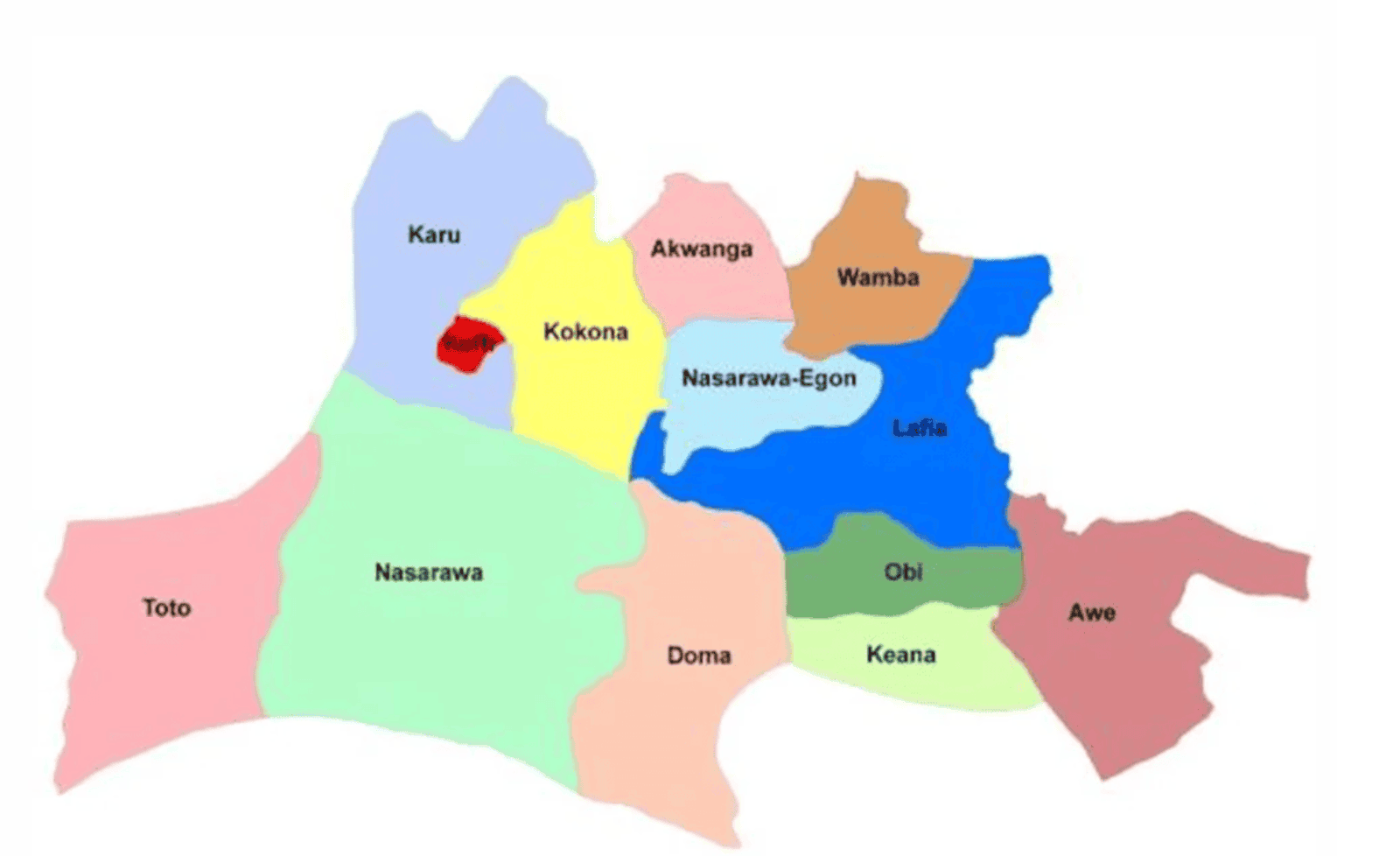
Nasarawa State Map
Best Regions/LGAs for Production
Primary LGA: Nasarawa Eggon
Represents Nasarawa State's premier ginger-producing zone, benefiting from suitable elevation (400-800m), adequate rainfall, and well-drained soils. The area's established ginger farming traditions and growing processing infrastructure support production expansion.
Secondary LGA: Akwanga
Ranks as Nasarawa's second-most productive ginger zone, distinguished by its good road connectivity to Abuja (80km) and Lagos markets. The area's suitable growing conditions and market access attract commercial ginger investments.
Tertiary LGA: Wamba
Positioned in the southern part of the state, offers suitable elevation and adequate rainfall for ginger cultivation. The area's lower population density provides land availability for commercial-scale operations at competitive prices.
Growing Conditions
Climate
Tropical savanna climate with distinct wet and dry seasons similar to Kaduna State. Adequate rainfall during growing season, dry conditions during harvest.
Soil Type
Well-drained loam to sandy-loam soils suitable for ginger. pH 5.5-6.5, good drainage essential. Similar soil conditions to Kaduna State.
Rainfall
Annual precipitation 1,000-1,300mm adequate for ginger cultivation. Seasonal distribution supports growth cycle with dry season facilitating harvest.
Temperature
Warm temperatures 25-30°C during growing season. Similar temperature regime to Kaduna State providing optimal conditions.
Altitude
Production at 400-800 meters elevation. Lower average elevation than Kaduna State but within suitable range for ginger.
Water Availability
Adequate rainfall during growing season eliminates irrigation needs. Dry season facilitates processing.
Project Implementation Strategy
Phase 1: Land Preparation & Planting Material (Months 1-2)
Select suitable site with well-drained loam soils, good road access, and proximity to processing facilities or export routes. Conduct deep plowing (30-40cm) and prepare raised beds or ridges (20-30cm high) to ensure good drainage. Source quality seed rhizomes (10-12 tons per hectare) from reputable suppliers or previous season's harvest.
Phase 2: Planting & Early Growth (Months 3-5)
Plant seed rhizomes at onset of rains (April-May) when soil moisture adequate. Plant at 25-30cm spacing on ridges or beds. Apply organic matter (10-15 tons per hectare) and basal fertilizer (NPK 15-15-15 at 300-400 kg per hectare). Implement weed control and monitor for pests and diseases.
Phase 3: Vegetative Growth & Maintenance (Months 6-8)
Apply top-dressing fertilizer (urea at 100-150 kg per hectare or NPK at 200-300 kg per hectare) during rapid growth phase. Continue weed control and pest/disease monitoring. Implement integrated pest management for rhizome rot, leaf spot, and other diseases.
Phase 4: Maturation & Harvesting (Months 9-10)
Monitor plant maturity (yellowing and drying of leaves indicates harvest readiness). Harvest when plants fully mature (8-10 months after planting). Carefully dig rhizomes to avoid damage. Expect yields of 8-15 tons fresh rhizomes per hectare (2-4 tons split ginger after processing).
Phase 5: Processing & Marketing (Months 11-12)
Wash harvested rhizomes to remove soil. Peel rhizomes (manually or mechanically) to remove outer skin. Dry peeled rhizomes to 10-12% moisture content using sun drying or mechanical dryers. Sort and grade dried split ginger by size and quality. Package for export (typically 50kg jute bags). Market through export companies, buying agents, or direct export relationships.
KEY ADVANTAGES & SUCCESS FACTORS
Lower Land Costs
Land prices 30-50% lower than Kaduna State while maintaining similar growing conditions
Strategic Location
Proximity to Abuja (federal capital) and good road access to Lagos facilitate market access
Expansion Potential
Growing ginger production creates opportunities for processing infrastructure investment
Government Support
State agricultural programs provide support for ginger production and processing
Similar Growing Conditions
Agro-ecological conditions comparable to Kaduna State ensure production viability
3. Gombe State
Gombe State secures the third position among Nigeria's ginger producing states through suitable conditions in its southern zones, lower production costs, and growing recognition as an emerging ginger production area. The state accounts for approximately 15% of national ginger production, producing over 45,000 metric tons annually.
Gombe's competitive advantage stems from lower land and labor costs compared to Kaduna and Nasarawa states, adequate rainfall in southern zones (900-1,200mm annually), and government support for agricultural development. The state's ginger production is expanding as farmers adopt the crop and processing infrastructure develops.
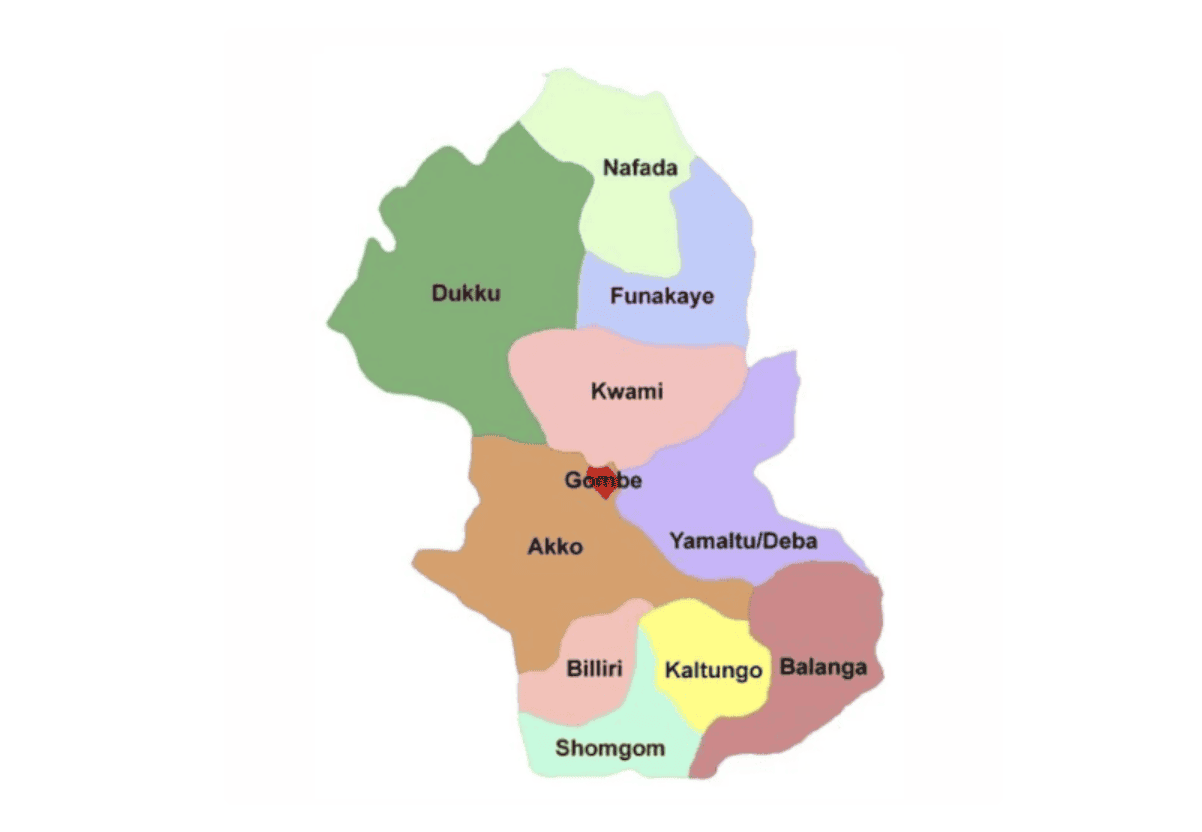
Gombe State Map
Best Regions/LGAs for Production
Primary LGA: Kaltungo
Represents Gombe State's premier ginger-producing zone, benefiting from higher elevation (500-800m) in the southern part of the state creating suitable conditions. Adequate rainfall and appropriate soils support ginger cultivation.
Secondary LGA: Balanga
Ranks as Gombe's second-most productive ginger zone, distinguished by its suitable elevation and adequate rainfall. The area's lower population density provides land availability for commercial operations at very competitive prices.
Tertiary LGA: Shongom
Positioned in the southern highlands, offers suitable conditions for ginger cultivation. The area's developing ginger production creates opportunities for early movers to establish processing infrastructure and market relationships.
Growing Conditions
Climate
Tropical savanna climate transitioning to semi-arid in northern areas. Southern zones have adequate rainfall (900-1,200mm annually) for ginger cultivation.
Soil Type
Well-drained loam soils in southern zones suitable for ginger. pH 5.5-6.5, adequate drainage. Soil conditions vary across state with southern zones most suitable.
Rainfall
Annual precipitation 900-1,200mm in southern zones adequate for ginger. Lower rainfall than Kaduna and Nasarawa states but sufficient with good management.
Temperature
Warm to hot temperatures 25-32°C. Slightly warmer than Kaduna State but within acceptable range for ginger cultivation.
Altitude
Southern zones at 500-800 meters elevation provide suitable conditions. Lower average elevation than Kaduna but adequate for ginger.
Water Availability
Adequate rainfall in southern zones during growing season. Dry season facilitates harvest and processing.
Project Implementation Strategy
Phase 1: Land Preparation & Planting Material (Months 1-2)
Select suitable site with well-drained loam soils, good road access, and proximity to processing facilities or export routes. Conduct deep plowing (30-40cm) and prepare raised beds or ridges (20-30cm high) to ensure good drainage. Source quality seed rhizomes (10-12 tons per hectare) from reputable suppliers or previous season's harvest.
Phase 2: Planting & Early Growth (Months 3-5)
Plant seed rhizomes at onset of rains (April-May) when soil moisture adequate. Plant at 25-30cm spacing on ridges or beds. Apply organic matter (10-15 tons per hectare) and basal fertilizer (NPK 15-15-15 at 300-400 kg per hectare). Implement weed control and monitor for pests and diseases.
Phase 3: Vegetative Growth & Maintenance (Months 6-8)
Apply top-dressing fertilizer (urea at 100-150 kg per hectare or NPK at 200-300 kg per hectare) during rapid growth phase. Continue weed control and pest/disease monitoring. Implement integrated pest management for rhizome rot, leaf spot, and other diseases.
Phase 4: Maturation & Harvesting (Months 9-10)
Monitor plant maturity (yellowing and drying of leaves indicates harvest readiness). Harvest when plants fully mature (8-10 months after planting). Carefully dig rhizomes to avoid damage. Expect yields of 8-15 tons fresh rhizomes per hectare (2-4 tons split ginger after processing).
Phase 5: Processing & Marketing (Months 11-12)
Wash harvested rhizomes to remove soil. Peel rhizomes (manually or mechanically) to remove outer skin. Dry peeled rhizomes to 10-12% moisture content using sun drying or mechanical dryers. Sort and grade dried split ginger by size and quality. Package for export (typically 50kg jute bags). Market through export companies, buying agents, or direct export relationships.
KEY ADVANTAGES & SUCCESS FACTORS
Lowest Production Costs
Land and labor costs significantly lower than Kaduna and Nasarawa states improving investment economics
Expansion Potential
Emerging ginger production area creates first-mover advantages for processing infrastructure
Government Support
State agricultural programs support ginger production as priority export crop
Lower Competition
Less saturated markets compared to Kaduna State create opportunities for differentiation
Export Potential
Growing production volumes attract export buyers and processing investments
Conclusion
Split ginger represents a lucrative export-oriented agricultural investment combining strong international demand, premium pricing, and relatively short production cycles. Kaduna State offers optimal conditions with established processing infrastructure and export logistics. Nasarawa State provides similar growing conditions with lower land costs and a strategic location. Gombe State demonstrates frontier opportunities with the lowest production costs and expansion potential.